Better Busy Than Bored

Too much to do is better than too little.

Naturally, it’s good to strike a balance. But if you’re not sure what that balance is yet, I think it’s better to push the envelope a little. You are capable of amazing things, and often the only thing standing in your way is doubt.

Given half a second to think about it, your brain will prioritize a safer, more risk-averse path for you. Don’t jump – you won’t make it. Don’t try – you might fail. Don’t reach – you’ll get burned.

So say yes. Commit, then figure it out. Agree, plan, execute.

If you find you’ve taken too much onto your plate, you can pare it back later, but you’ll have the benefit of knowing which things you’re doing hold the most value to you. Which ones make you money or make you happy or both, which ones move you forward and which don’t. And you might find that some of those things hold deep satisfaction for you, and you wouldn’t have known if you were afraid to say yes in the first place.

As a general rule, if saying “yes” to something isn’t going to put you on the hook for more than a few months, it’s fine to dive in. Don’t be hasty to commit yourself to something that will be multiple years, but what’s the worst that happens if you take a six-month internship? Go for it!

Agree, plan, execute. You are capable of amazing things.

Do or Do Not

Whenever someone says, “I’m trying to do X, but it’s not going very well,” I cringe a little.

While it is possible to try your best at something and still fail, the reality is that 99% of the time, failure doesn’t come from you “trying your best.” It comes from something being in the way of your success – and that “something” might be you.

In order for any attempt to count as “trying your best,” it has to include an honest, deep assessment of what things are causing you to fail and what you’re doing to remove those obstacles.

Here’s an example: “I’m trying to watch what I eat, but I keep failing.” When pressed for details, the person says “Well, I’ve been eating mostly healthy vegetables and proteins, but then when I get stressed out I eat brownies.” Well… why do you have brownies in your desk drawer at work? “For when I get stressed out.”

Okay, that’s no longer you trying your best, then. Trying your best would include recognizing that you’ve sabotaged yourself and throwing away the snacks. It probably also includes an assessment of what things cause you to stress and how to decrease the impact of those things. (Incidentally, this is further proof that self-improvement in one area isn’t done in a vacuum. Improving one area of your life will almost always improve other areas both as a consequence and a necessary condition. A rising tide lifts all boats.)

“Trying your best” also has to include changes to strategies that aren’t working. “I’ve been trying to get a promotion at work for two years, but it hasn’t happened.” What have you done? “Every time there’s a management position open, I apply to it.” Okay, but since the first time you did that, what have you changed about your work habits or activities? “I show up to work every day and I do my job.” Okay… so, nothing. You applied for a management position two years ago and two months ago, but nothing has changed about you in between. Why would you expect a different outcome?

If you’re not taking a serious look at the things you’re doing that prevent you from succeeding, you’re not trying. And if you do take a look at those things and fix them, you may find that you don’t need to try at all… you just Do.

Take Your Time

I hate waiting.

I’m a planner and a doer, but I’m horrible at being patient. I need activity; tangible movement towards my goal. I’m fine with a goal taking ten years to accomplish, as long as I’m actively doing something every day of those ten years.

I am really, really bad at stopping to smell the roses.

When I was a young man, somewhere between ten and twelve years old, my father taught me how to mow the lawn, trim the edges, pull the weeds and just generally do the landscaping in the summer. A vital part of the process, according to him, was pulling out a lawn chair when you were done, and sitting in it with a glass of lemonade and looking at the lawn for a while. I asked him why it was so important to do that. His initial joking answer was “so you can see all the spots you missed,” but his more serious answer was that it was important to take time to reward yourself for the hard work you did by enjoying what you worked for.

That was the part I was worst at. I enjoyed mowing the lawn; I could put headphones in, listen to music and let my mind wander while I did the relatively simple task more or less on auto-pilot. But when it was over, I wanted to be on to something else. I didn’t want to linger.

I’m the kind of person that always has something cooking. There’s always a dozen project ideas eager to fill in any spare gaps in my schedule. I have children that it’s easy (and fun!) to lose hours with as they laugh and climb on me. I put a lot of hours into work ambitions. I honestly can’t remember a time in the past twenty years when I didn’t have anything to do. I don’t remember the last time I was bored.

But I also don’t remember the last time I stood still for more than five minutes. I tried meditating recently and failed miserably. I don’t relax well. If you need a more clear picture, just know that I feel deeply and personally attacked by the following comic:

Hahahaaaaaaaaaa.

Anyway, I haven’t given up. I always try to maintain a student mentality; I live to learn. I’m very open to suggestions and ideas on how to better enable myself to step back and relax now and then. So if you’ve got them, please share!

Friends in the Upside Down

Don’t you disrespect me little girl!
Don’t you make me scowl or sneer or frown!
You’re in my world now,
Not your world!
And I got friends in the Upside Down!
(He’s got friends in the Upside Down!)

That’s an echo, kids.
Just a little something we have here in
Indiana, a little advanced lesson. Don’t worry…

I cruise in my Camaro
To see Ted Wheeler’s wife
But if you run around the pool then you will get banned for life.
Then I got my mind flayed,
I can flay some others’, too
I’ll help build a monster out of meat,
(you know I can see you, right Eleven?)
‘Cause he built this all for you!

Rats pop – juicy!
I got Busey!
I got slaves all over this town!
And I got friends in the Upside Down!

(I am so, so sorry. Once this idea popped into my head I couldn’t get it out, and the only way to alleviate my suffering was to inflict it on you.)

The Sake of Argument

You can see a lot of love and care in how someone argues with you.

Let’s say you just had a birthday, and your significant other didn’t do anything for it. Maybe they forgot entirely; maybe they just didn’t think birthdays are a big deal. Not important. So you approach your significant other and say, “Hey, my birthday came and went without you really acknowledging it, and that made me feel upset and neglected.”

Now, let’s say your significant other doesn’t take this well, and it starts an argument. They go immediately into “fight mode” and emotions get hot. Surely not ideal; you’d rather they respond in a calm way, but hey – we’re humans. That doesn’t always happen. But even so, HOW the heated argument begins can tell you a lot. Consider these two potential responses:

A: “Well, you forgot to celebrate my work anniversary earlier this year, and that really meant a lot to me because it represented an actual accomplishment, and you didn’t even acknowledge it. So you’re the jerk here, not me.”

B: “I did so acknowledge it! I made you your favorite dinner and then I did the dishes myself, even though we always do I cook/you clean. I didn’t get you balloons and a cake because I didn’t realize you’re a child, but that’s not the same as me ignoring it.”

These are both argumentative responses, obviously. And some people might look at them and not see much difference. But honestly, I see a world of difference between the two, and I’d always rather be on the receiving end of “B.”

Why? In the “A” response, the other person is immediately dismissive of my reason for being upset. They don’t even hear it. The just immediately launch into a separate thing that I’ve done that was worse. That’s a terrible way to bridge a gap. That’s what a negative emotion is – a gap between two people. Responding like “A” is aiming a north pole of a magnet at another north pole of a magnet: it pushes them away from one another. That line of argument just leads to a game of one-upsmanship where you’re each trying to call the other person a bigger and bigger jerk so you can be the one to justifiably be mad. It doesn’t show respect for the other person or their concerns.

Now, look at “B.” Yes, it’s argumentative. But at least the argument implicitly respects the other person’s concerns as valid. “A” says “I perfectly admit that I did the bad thing, but I don’t apologize or care.” “B” says “I agree that you’d be right to be upset if I did that thing; that’s a valid concern and a valid emotion to feel about it. Rather, I dispute the facts of the specific case.” There’s a line there that leads to closing the gap and bonding rather than pushing away.

If you’re holding old slights to use as fodder for “A”-style arguments, I encourage you to resolve them independently. Either let them go (if they’re minor) or talk them out (if they’re not). But don’t sit on them until the next time you make a mistake (which we all, all, ALL do). Because when someone you care about comes to you with a pain in their heart, you want yours to be clear, so you can really hear them. Sometimes things may get heated or emotional, but let that heat and that emotion come from a place of love, from pulling together and working on things, rather than having it be ammunition. We’re only human.


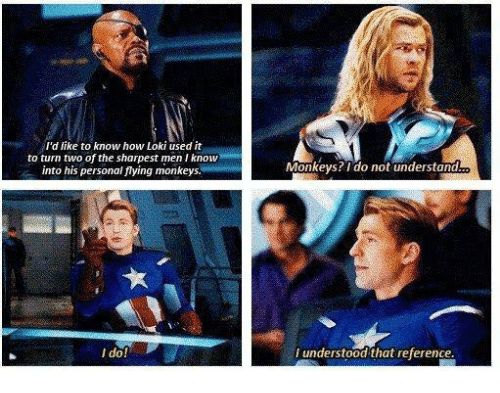
Darmok

(Very geeky post incoming.)

There’s a brilliant episode of Star Trek: The Next Generation called Darmok. The crew of the Enterprise meets a species that they can’t communicate with. The Universal Translator works fine – they can understand the literal words the aliens are saying, but the aliens’ speech is so riddled with cultural references that the crew of the Enterprise are just totally lost, since they have no shared cultural references to rely on.

One of the characters says it would be like referring to a woman as looking like “Juliet on the balcony.” In a culture that has pervasive knowledge of Romeo and Juliet, you’d get what they were saying. But if you didn’t know that reference, you’d be confused even if you understood the words.

And then, in turn, THIS is a reference!

Shared culture does a lot to facilitate communication. It can seem silly, but we constantly make references to our culture when we communicate, and the more of that culture you share with someone else, the better the communication can be. We often scoff and roll our eyes at corporate-style “team building” exercises, but the concept is sound – the execution is just off. Want to do some real team-building? Everyone in the office should watch the same movie.

I worked in an office recently where a lot of my co-workers hadn’t seen the brilliant comedy Office Space. As soon as I realized this, I made everyone watch it, and sure enough, there were references a-plenty afterward. Many of them are just jokes (not that some shared laughter ever hurt a team culture), but sometimes you’d be able to communicate an idea faster or more efficiently by making a reference. It can help someone grok your idea or message.

My favorite thing about this whole phenomenon of shared-culture-as-communication-grease is that the best word I can think of for it is “Darmok.” That word could summarize this whole blog post – if you got the reference.

Who’s In Charge Around Here?

Projects need leaders.

In order for any endeavor to be successful, someone has to be in charge of it. If you’re doing something by yourself, then it’s easy – it’s you. But what happens when you tackle something as a team?

This isn’t just for work-related projects, either. In literally any activity where 2 or more people have to work together, you’re wildly more likely to be successful if one person has final authority.

You can (and should!) invest that authority with whatever restrictions the team feels is necessary. The person in charge might have conditions under which they’re no longer in charge – like an election or something of that nature. But as long as they are in charge, they need to be the final deciding vote.

Because sometimes, you’re just going to have to break a tie. Sometimes the normal collaboration process is just going to take so long that you need a decision within a particular window and you can’t get it otherwise. Even Steve Jobs and Steve Wozniak hired a third guy when they were first starting out for exactly that reason – you need a tie-breaking vote sometimes in order to get things done.

Of course, Ronald Wayne wasn’t their leader – so you can create a structure for decision-making that doesn’t necessarily require one ultimate person making every decision. But what you do need, is that kind of structure. A setup that tells you exactly who the final decider is under every circumstance.

If you get four people together and say “We’re going to build a house together,” you can see the problem when one of them wants bay windows and another wants French doors. Especially if they’ve all already sunk money into the project and can’t easily walk away. That’s a lack of foresight, sure. But the easiest way to avoid the problem is to say “We’re going to build a house, and since Susan has the most experience with this, we’re all agreeing to defer to her in final decision-making if there’s a disagreement. If you don’t trust Susan’s ability to lead or her design expertise, don’t sign onto this project.”

Clearly defined leadership from the start is also much preferable to assumed leadership mid-project. If a team is assembled for a project at a company and no one is defined as the leader, it’s very likely that one person will assume that role. It’s also very likely that that person won’t be the ideal choice for it, because they’ll take the leadership position on strength of personality rather than on expertise. Other people might become bitter and the project will suffer. But if right from the start you say “Okay, I’m assigning you six to the new marketing initiative, and I’m putting Randy in charge,” then you can get any objections up front, clearly lay out expectations, and avoid as much power-jockeying as possible.

When you have the opportunity, assign a leader clearly. When you are one, take all responsibility. When you aren’t one, respect the person who is until it’s time to walk, but don’t straddle the fence. It’s the only way things get done.

Social Mediocrity

If you had to explain each social media platform you use to someone who had never heard of social media before, how would you differentiate?

Why do you use the ones you do? Why DON’T you use the ones you don’t?

Is the UX important? The culture? Who is and isn’t on with you?

How do you feel about the tradeoffs between size and specialization?

I’d love to hear. Tell me on any platform you like.

Spilled Ink

I like tattoos.

Tattoos jive very well with my two most firm beliefs about the human body:

  1. The human body is not some sacred thing; it’s a life-support system for your brain, and its only purpose is to carry you around on adventures for 80 or so years until it wears out, and
  2. You own it.

I don’t think you should disrespect your body, but that’s because replacement parts are very expensive, and it’s a sound investment to do regular maintenance. Plus, the generally healthier you are, the more adventures you’ll get to go on.

But you don’t have the slightest obligation to keep it unmodified in its original condition. Your body isn’t a John Deere tractor; you’re not leasing it. It’s 100% yours. And that means you can modify it, decorate it, or operate it any way you please.

I particularly like this quote: “You don’t have a soul. You are a soul. You have a body.”

Now, all this comes with the same caveats any choices come with – choices have consequences and every action you take tells a story about you. If you choose to operate your body by filling the tank with alcohol all the time, you’re within your rights to do so, but you might regret it later. And of course you have a responsibility to operate your body in such a way as to not harm anyone else. As long as you’re doing all that, though, I say have fun. Dye your hair. Get your nose pierced. Get that tattoo.

I always laugh when someone says “Don’t you know those things are permanent?” Permanent? Ha ha ha! All we are is dust in the wind, dude.

Like in all things, I give the advice to always be aware of what messages you’re sending with your actions, and to make sure they’re the messages you want to be sending. But that’s not any more true of tattoos than anything else you do. Go through life consciously and deliberately, and your other choices will be fine.

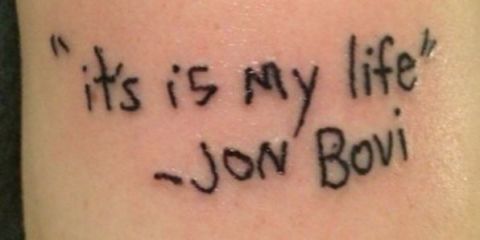
Oh, but please, for the love of all that is holy: Spell check.