

One of the surest ways to cloud your thinking about a question is to map the possible answers onto tribal affiliations. In other words, if a question has an “us” answer and a “them” answer, then it doesn’t matter which one is right – you’ll pick your tribe’s answer nine times out of ten.
Month: April 2026
Path of Knowledge
Sometimes the best way to teach is simply to put a curious person in the path of knowledge and then back up. The opportunity cost of everything you want to teach is everything else they want to learn in that moment; never forget it.
Willingness to Reason
An incredibly underrated but vastly powerful trait is the willingness to start reasoning toward an answer that you don’t already know, instead of just saying “I don’t know” as if that was the final word on the subject. You can learn via others teaching you, and you can learn by experience – but you can also learn by pure reason, and if you’re willing to at least give it a try, marvelous doors start to open up.
My son was talking about geometry, and so I figured I’d ask him a weird one and asked if he knew how many sides a septagon had. Here is his direct quote answer:
“I don’t, but it’s not 5, 6, or 8, because that’s a pentagon, a hexagon, and a[n] octagon. And ‘sept’ sounds like ‘seven,’ which is how I remember that ‘siete’ means seven. So I’m gonna guess seven.”
What a powerful brain! Such a mind can overcome any obstacle, simply because it believes that a path to the other side must exist. Being unwilling to take “I don’t know” as a satisfactory state of affairs, you can always begin to reason. You won’t be able to get all the way to every solution that way, but you’ll get much farther than you would otherwise, and you’ll almost always at least get to a point where you have an idea for a better question or more specific source of information to seek out.
Learn from Buddy!
Broken Records
I absolutely love hearing about new records in some achievement or another. I love seeing the advancement of humanity, and I adore the downstream effect when someone breaks some barrier previously thought unbreakable: a bunch of other people do it.
One of my favorite such stories is the story of Roger Bannister, the first person to run a sub-four-minute mile. Previously thought impossible, more than a hundred other people did it in the year following Bannister’s record-breaking run.
Well, we have a new story to be amazed at! Like Bannister’s record, it was long thought impossible for a person to run a sub-two-hour marathon, but Sabastian Sawe has just done it. Want to know what’s extra amazing? It took eleven seconds for someone else to do it – the second-place winner of the same marathon also finished in under two hours!
My prediction is that in the next year, we’ll see many marathons with winners running in under two hours. Once a record is broken, humanity surges to catch up. It happens again and again, like a glorious broken record.
Good Taste
Ownership ties into enjoyment a lot. If you don’t believe me, try feeding any new food to a young child without their input. They’ll fuss and moan before they’ve even had a bite. But ask them to make it with you and suddenly it’s the best food they’ve ever had.
Part of us always rebels against things being forced upon us. If you want to like something, all you have to do is invest a little part of yourself into it. Suddenly your wiring will adapt.
After Obligation
There are plenty of practical reasons not to procrastinate. Leaving room for error, advancing projects faster, etc. But there’s also a major yet undervalued mental reason: the time after your obligations are done is simply more enjoyable than the time before.
Maximizing the amount of time you spend in your life without a deadline hanging over your head is a worthy goal. The earlier you accomplish each task, the more of that time you have. Even if you spend it the same as you would, it’s simply more joyous.
You might even decide to take a nap!
Left Behind
If you saw a chart that showed that the rate of left-handedness had significantly increased around a certain time, you might reach very different conclusions based on whether or not you understood the mechanism behind it.
First: “the map is not the territory.” When you’re looking at any kind of chart, data, etc., always remember that you’re looking at what was recorded, not what necessarily was. If you need a clearer example: Imagine a survey where the question was: “Have you ever committed a felony and gotten away with it?” 2% of respondents answer “yes.” Would you conclude that only 2% of people had gotten away with felonies? There’s always bias in the way people answer.
Which brings us back to left-handedness. Did people suddenly start being left-handed? Or did being a southpaw stop being stigmatized so people were more comfortable reporting that they were?
Don’t assume the mechanism is what it appears to be. People’s incentives to tell the truth are always a factor.
Accomplishmentality
You absolutely need to celebrate yourself. It’s not about humility; you can do this when no one’s looking. But if you don’t give your brain a reward when you accomplish something, several bad things happen.
First, you start to lose motivation to accomplish things! Your brain seeks that sweet sweet dopamine, and if you condition your brain that you get it when you achieve something, your natural motivation levels will increase. But if you work yourself to the bone and then don’t stop to give yourself an associated reward, your brain associates toil with… nothing. Just toil.
Second, you need to imprint on yourself that you did accomplish something, or your brain thinks you didn’t! You’ll undervalue yourself and your skills, hurting your ability to negotiate with them. I’ve seen so many “hard workers” chronically accept less than they’re worth simply because they don’t think they have that much to offer. All they’ve done is “work hard,” so their brain fixates on that as their only value-add, instead of the actual results of all that effort!
So when you hit those milestones, have a treat! Dance a little! Do whatever it takes to imprint on your subconscious that you achieved a valuable goal. Your brain deserves it, and so do you!
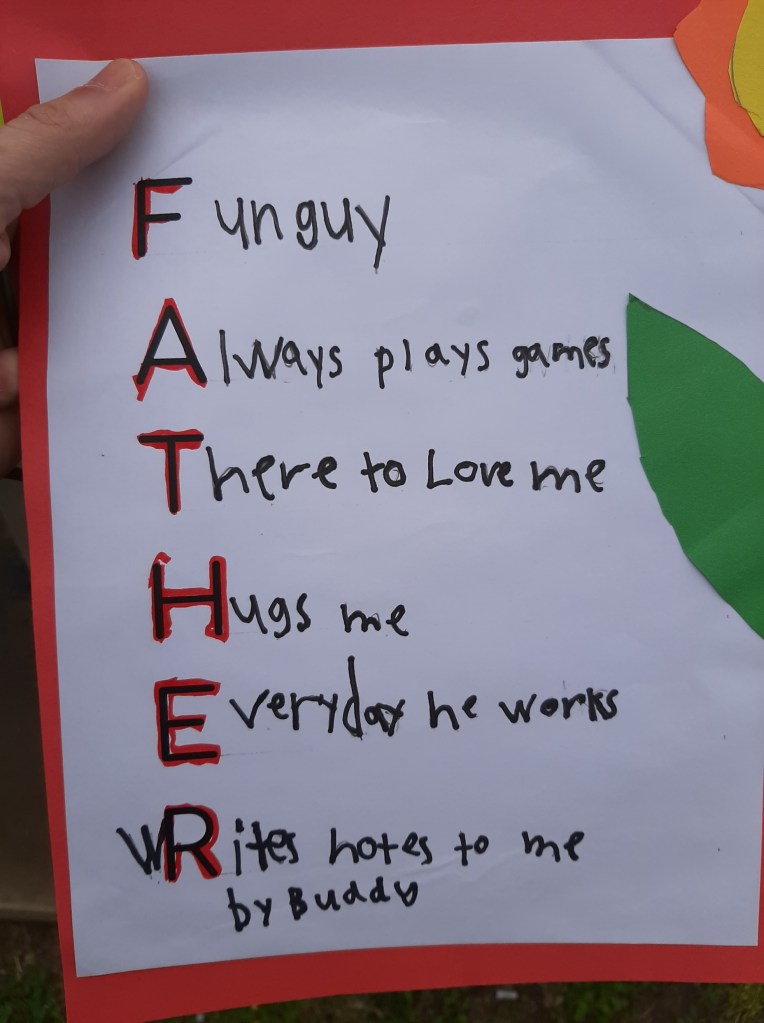
Fathe(w)r
I am overcome with joy, as only a father of a boy this good can be.
Always Experiment
Someone explaining to you why your idea wouldn’t work is vastly different than them explaining why it didn’t work.
The former is skepticism. It might be correct, but it’s theory. Even if it turns out to be true, running the experiment can still be worthwhile, to iterate towards success.
Giving you the benefit of prior experience, on the other hand, is a valuable gift. If someone tells you that they also tried the same idea and it failed, and why it failed, then you should listen. You’re basically getting the benefit of (at least) one experiment already run! You’re a step closer to success just by listening.
Importantly, the second person is also a more trustworthy source, simply because they actually tried the idea. That alone puts them on a different intellectual level than someone who simply decided from the armchair why they wouldn’t give it a shot.
Experiement, always!

