Four Weeks

Some things take four weeks (or three, or five, or whatever – the point is that some things just take the time they take). You may not like it, because you’re impatient or lazy or whatever.

So you try very hard, counter-intuitively, to find a way to shorten the task. To make it take, somehow, less than four weeks.

Six months later, you’ve made no progress. The task is still in front of you, and it will still take four weeks. Maybe you’re so frustrated at this point that you quit. Even the best-case scenario is that you complete the task, but it took far longer than necessary out of desire for a shortcut.

This doesn’t mean that you should always blindly accept the world as it is and never seek inefficiencies! Heck no! But this is the crucial wisdom: the best way to learn how to do something better is to do it the hard way first.

Take the four weeks and do the thing. You’ll definitely find ways to improve while you’re doing it. It may be too late to enact those changes this time, but you can enact them next time with little friction. And maybe you can sell the techniques, while you’re at it.

The wisdom of a thing is inside that thing. Experience, the greatest teacher, requires that you step into the classroom – not observe it from outside, before the lesson.

Skip the Embarrassment

Today, while walking with my daughter, she slipped her arm into mine and asked me to skip with her. A sidewalk along a busy road, all those people! Oh no, what if I get embarrassed?!

Hahaha, just kidding. That stuff never even crossed my mind, I just started skipping. Why would I be embarrassed?

I’m not immune to embarrassment. I just have a good handle on what people will actually think. If I was in a situation that might genuinely lessen others’ respect for me, I’m sure I might feel (or at least fear) embarrassment. But what are people actually going to think when they see me? “Oh, look at that jerk, playing in the sunshine with his daughter! Capturing the sublime beauty of the all-too-fleeting years of childhood and fostering a stronger bond with his family! Pssssh, but he looks silly, what a loser!”

No one thinks that. You wouldn’t think it, either. Heck, as I skipped along the road with my daughter, people applauded. Obviously, this is good parenting advice – indulging your kid is more important than imagined social standing – but it isn’t just good parenting advice. It’s good advice everywhere. People want to cheer and support. No one cares if you skip, so skip caring.

Rare Species

What made you happy today?

If you watched a playback of your day today, minute by minute, studying it like a conservationist studies a rare animal species, I guarantee you that you would find moments of joy. Smiles, even on an otherwise bleak day. But since you probably don’t study your day like that, those moments may simply have passed by without notice. Without your awareness, they gave you a little more energy or a little more hope and then slid by, and you went about the rest of your life. If the day overall was bad, you may even slump down at the end of it and say “what an awful day, nothing good happened at all.”

The rare species is endangered. Someday it may go extinct.

We pay so much attention to the things that make us miserable. Ideally, we do this in order to avoid those things in the future (although a certain kind of person seems absolutely addicted to seeking those things out). But you can’t become happy by avoiding misery. That’s not how it works. You have to seek the happiness directly. The world is full of misery – with each new type you evade there will be a new one to take its place. Unless you simply fill your life with happiness to plug the gap before it gets a chance.

Pay as much attention to the small moments of joy. Duplicate them! Don’t leave your happiness to chance, to the whims of the world. If the thing that made you happiest today was when you randomly saw a puppy that was being walked downtown, then tomorrow go visit the animal shelter and volunteer. Go to the dog park to eat your lunch. Visit a friend that has a new puppy. You can control these things!

Be greedy about your happiness. When a smile crosses your face, say to yourself “more, please.” Write it down, record it, send a text to yourself – whatever it takes to mark the moment. Then breed that species in captivity if you have to! It doesn’t have to stay rare forever.

The Curse of Humility

“If only I had a little humility, I’d be perfect.” – Ted Turner

If you’re going to be humble, you need to make sure that humility isn’t becoming a wall around you. Don’t be willing to spend hours or pages complaining or lamenting, and then two sentences (if that!) celebrating your wins. You can talk about success! Humility isn’t the act of hiding your accomplishments from the world. It’s recognizing their place in it and using them to help others.

If you successfully navigated a difficult situation, your modesty may tempt you to keep your mouth shut entirely or just brush it off with a throwaway line. But in doing so you not only rob others of the opportunity to learn from your path but you also imbalance your interactions with the world. When you’re upset about something, do you also censor yourself down to a single line or less? If not, then your complaints will rapidly outweigh your positivity. That helps no one.

If you get to the top of the mountain, let your hand reach down to help up others who haven’t made it yet, and let your voice ring out “this is the way!” If all your words are aimed at helping others, who can complain that they’re ringing out from the mountaintop?

Enjoy, I Shall

Today, I have been a father for ten years.

My oldest, my first, the perfect gift that changed my life in a way nothing else ever could was born on this day ten years ago. I have spent the last decade attempting to live up to that monumental responsibility.

I look at her today, and I feel as though I’ve done a very good job. She’s amazing. She’s kind, noble, and heroic. She’s honest and caring. She’s a warrior, an artist, a scientist. One of my fears as a parent was always that I would push my children so hard that they’d become bitter or stressed, and when I see all the things my daughter does – her excellent grades, her many extracurricular activities, all her hobbies – that fear increases. But today, I asked her what the biggest takeaway from her first ten years on this planet was. This is what she said:

“Spend a lot of time with your family, and relax and enjoy life.”

So you know, I think she’s managing just fine. She already has more than enough personality, talent, and heart to handle all that she’s doing and all that she’ll do. I couldn’t be prouder; she exceeded my every expectation. Happy Birthday!

New Month’s Resolution – March 2022

Happy New Month!

This month, I want to take a deeper look at the “casual” information I absorb. I tend to read a lot of blogs and books, and from those, I also tend to allow a lot of connected voices into my feed. Not all of them have aged well, and others are fantastic and yet I don’t pay enough attention. Still others are great for what they are, but no longer as relevant to me. The point is that I want to just clean up my information stream a little.

We too often let things like that just pile up and never take the time to “clean house.” Take a look at yours, and make sure you’re still getting what you want out of the time you give to information acquisition!

Impressionist

Someone’s general impression of you will be drawn from three data points:

  1. The mean interaction they have with you.
  2. The most intense interaction with you (positive or negative) that they can remember.
  3. The most recent interaction they’ve had with you.

In their mind, they’ll “average” those data points together and that will largely determine what they think of you.

(This assumes that there’s no major tribal pressure to like/dislike you – if all of my peer group loathes you, then I’m very likely to also dislike you no matter what happens in the three data points above. But let’s assume no major societal pressures right now.)

To improve #1, make sure that you have frequent meetings. The average meeting will probably be fine, but there will definitely be negative ones. The negative ones tend to happen whether you want them to or not, so the way to reduce their impact is just to have more interactions with someone. They’ll forgive you for spilling a drink on them one time if you have pleasant lunches every week. But if the only time they had lunch with you in the past year is when you spilled a drink on them, that will weigh heavier.

To improve #2, make sure to reframe any majorly negative interactions. Look for the silver lining, and talk about it at subsequent interactions. Don’t let the time you botched the presentation remain a negative memory forever. Next meeting, say “I’m really glad that you were there for me and I was able to learn from you. You’re an awesome partner!” Now that memory shifts away from “they dropped the ball” to a more pleasant “I saved the day.”

To improve #3, make sure you focus on the end of an interaction. Even if a meeting was an hour long and 58 minutes of negative news, make sure the last few minutes consist of “This was a really productive meeting, lots of great notes, looking forward to next week! Thanks!” It really matters – this is why you never hang up on someone and “don’t go to bed angry” is good advice.

Take all these together, and the people you interact with will generally find you more favorable than if you don’t do this stuff. The effort and attention matter; use them.

Writer’s Shock

Ever since I started consciously blogging every day, I find myself far less likely to write anything on random other parts of the internet. That’s probably a very good thing. This blog has given me the habit of always reading what I write as I write it, instead of as I imagine it sounds in my head. I read it as I ponder the question of impact. Of tone. Of contribution.

Mostly, I then delete.

Plant your trees where they’ll get a lot of sunshine, is what I’m saying.

Practice Makes Progress

When you first start a new endeavor, those early successes can seem frequent and large. That’s natural, as the early days will be filled with plucking the low-hanging fruit, and it’s easy to double your skill level when you’re starting with almost none. Then, as you reach the intermediate levels, the progress can seem to slow down. You might be learning just as quickly – maybe quicker! – but in comparison to what you already know, it doesn’t seem as rapid. That can be demoralizing.

Some people hit that plateau and then quit because of it. They don’t feel as excited because they don’t perceive the learning as really happening in the same way.

If you want to avoid that and reinvigorate your desire, here’s a way to do so: for just a little bit, stop tracking your progress at all.

Keep practicing, keep doing. But if you used to have weekly evaluations, skip them for 3 months. Keep up your work, but don’t observe the outcome directly for a while.

When you come back in three months, the changes will seem huge. As you improve, you simply need longer stretches between evaluations to really capture the growth. By extending them, you can keep up their intensity.

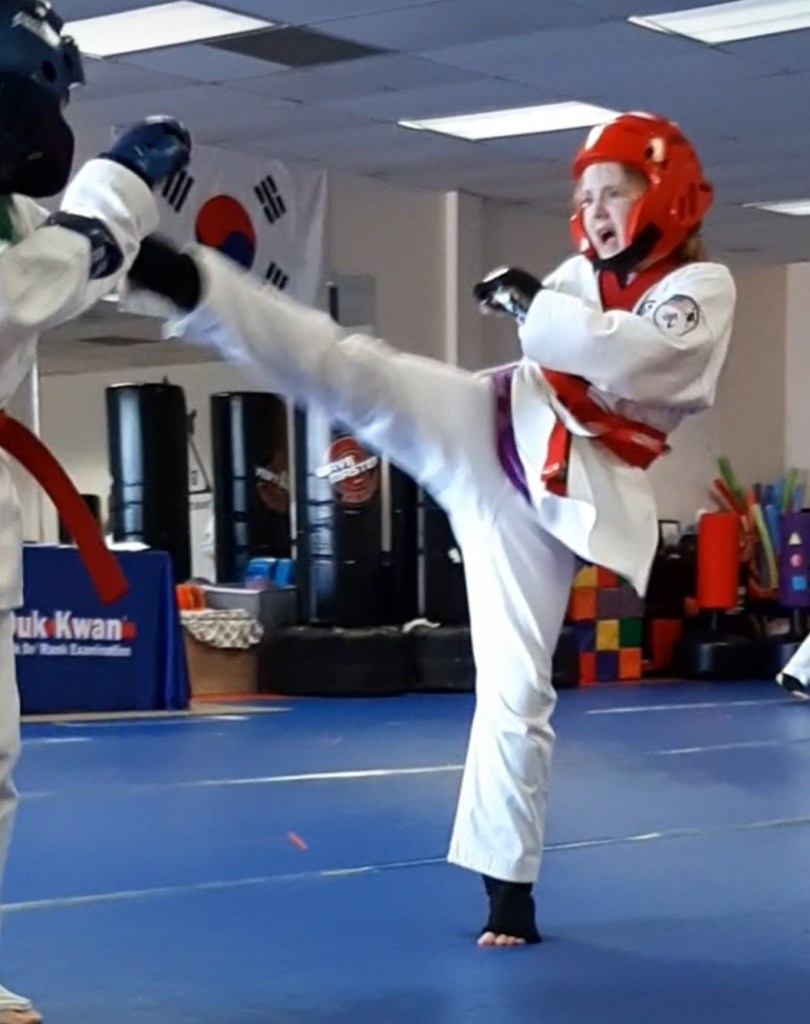
When my daughter first started karate, I used to go to every single practice as well as every test. As she improved (and got older), going to the practices became less vital – and she needed to grow, do more things without the watchful eye of her father. So now I only go to the tests. And wow! I get to be blown away every time as her skill level jumps. Then I tell her so, and she gets reminded that while her progress can seem slow to her, comparing each lesson to the last one only a few days prior, she’s actually improving considerably each time.

So take a step back from evaluations (with a commitment on a day in the future to do the next one), and let yourself amaze yourself all over.

Planned Panic

Sometimes you have an emotional response to something, and you might describe this as “less than ideal.” During periods of strong, negative emotional response we’re not at our most efficient, not very productive. This can mean we wish we didn’t have these periods at all, and we work hard to avoid or repress them – and we feel bad when we inevitably fail.

You aren’t going to ever be able to totally eliminate your emotional responses. They’re as much a part of you as pooping. Only a fool would try to just stop pooping because it’s smelly and inconvenient. Smart people invented the toilet instead.

Take some inventory about what those responses are like for you. When the emotion takes over, what do you do? Cry on your bed? Hit a pillow? Scream in the shower? Don’t judge yourself, but just write it down. Whatever you do, obviously you don’t do it forever – eventually, you come out the other side and do something to recover. What is that thing? Do you eat comfort food? Listen to a certain playlist? Reset with a workout, or accomplish a chore?

Okay, so now you have a map. You’ve charted the course of your panic attacks. That lets you plan for them, adapt your schedule to them, equip yourself for them.

For instance: imagine that every time you get a piece of really bad news, you cry for an hour on your bed, then take a shower and don’t really feel better until you treat yourself to a chocolate chip cookie. No matter how you try to avoid this, it happens. If you don’t cry for an hour in your bed, you’ll cry for three hours somewhere else. If you don’t shower after, the crying will re-start. If you don’t have the cookie, you’ll feel bad for days after. You can’t change any of this.

You also can’t completely control when you get bad news, so to a certain extent, you are simply “vulnerable” to this happening. You can waste a lot of time trying to block this from happening; making yourself more frustrated and reducing your ability to emotionally cope. Don’t. Instead, effectively give it its own space so that you can allow it to be the emotional repair you need while also getting your life back effectively.

How? Well, in the above example, I’d do a few things. First, I’d pre-program an alarm set into my alarm app – “45 Minutes: Crying. 15 Minutes: Shower. 10 Minutes: Cookie. 20 Minutes: Get changed and back on task.” That 90-minute set becomes my “panic plan,” and if I get bad news, I’m immediately going to hit a single button to start that off. That will help herd me through a tough patch when I may need a gentle nudge – even from myself.

I’ll also make sure that I have ready-planned “away messages” for work or other obligations in case this happens when I otherwise have responsibilities I’d be tending to. And lastly, I’d make sure there were always chocolate chip cookies in the house.

What does this do? For one, it makes it very likely that I can resolve this panic attack in a scheduled amount of time. It also means that during that time, I’m not as worried about guilt on top of everything else – this is what I’m doing now, that’s all. It allows me to focus on the emotion I need to feel.

You can’t avoid being human. And part of being human is unpleasant-seeming waste. But that serves a very crucial purpose; it needs to happen. Don’t avoid it; just be aware of what the process looks like in reality, and invent the appropriate toilet.