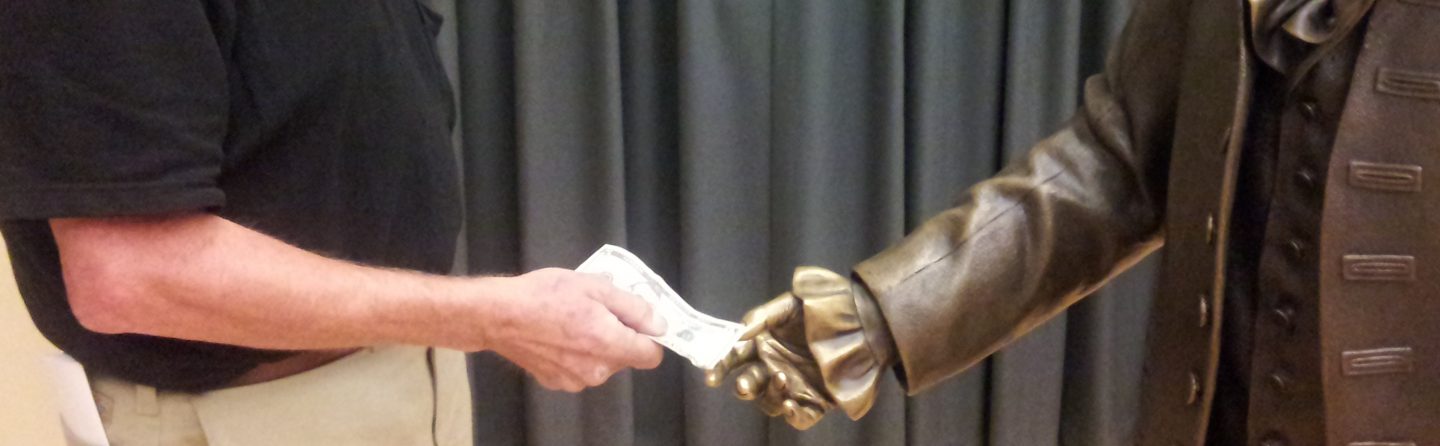
Mandatory

The more you have to do something, the less you enjoy it.

My father told me that one of the worst decisions he’d ever made was when he turned his passion for photography into a business. Even though he was successful and ran that business for 15 years before retiring from it, he said it sucked all the joy out of it.

An old story I’ve heard many times: bright young minds whose love of reading is absolutely crushed by the way the factory that is school chews up and spits out any real enjoyment from the act, reducing it to a narrow pipeline of books you didn’t choose, which you read just to regurgitate facts about them. Then, some of those kids rediscover reading later in life and fall in love again – sadly, many don’t.

But we can’t avoid all responsibilities in life. Some stuff is just mandatory. Are we doomed then to always hate the stuff we have to do? Will work, permanent relationships, and maintenance of your home always be grey and loveless endeavors?

I don’t think so. I think there’s a secret ingredient that lets you split the difference.

Make sure you always have a walk-away point. An exit strategy. Keep things from ever being truly mandatory, but instead make them things you choose every day.

For instance, take your job. For many people, the need for gainful employment is just a fact of their life. But the people that need jobs the most often end up being the most miserable in them. Instead, be frugal. Reduce your needs. Live well below your means, so that you have enough of a cushion that you can walk away from your job any time. Sure, you may have to get another – but you’ll have the economic/financial mobility to do so. The very fact that your dependence on the job is reduced will in turn lower your stress and increase your enjoyment, making it more likely that you’ll remain and thrive!

A mistake I’ve seen many people make in terms of romantic relationships is moving in together just to save on rent, far earlier than is appropriate. Suddenly you’re with someone not just because you want to be, but because you can’t afford to live on your own. That’s a recipe for disaster – dependence breeds contempt if done too early.

There are sometimes good reasons to become entangled in such a way that you can’t easily walk away from something. But they should be taken only with great consideration. The less handcuffed you are to anything, the happier you’ll be with everything.

Image result for handcuffs

Repairs

Most engines have more than one moving part. Pretty much everything around you is an engine – heck, you’re an engine. The classic thing under the hood of your car is a kind of engine, one that converts liquid fuel into movement. But in a broad sense, an engine is any device or process that turns one resource into another. You’re an engine that converts food into action. Your mind is an engine that converts information into ideas. And so on.

When a valuable engine breaks down or malfunctions, we don’t generally throw the whole thing away. Because engines are made of a great many moving parts, it’s possible for the whole engine to work poorly (or stop altogether) because of one faulty component. Isolating that component and fixing or replacing it is a much better idea than scrapping the whole machine.

That doesn’t mean it’s easy, though. Even a trained auto mechanic might take a decent amount of time and effort, as well as a few mistakes, to figure out which part of an engine is faulty and repair it. I probably couldn’t do it at all. The same with the human body – a doctor might be able to figure out which of my internal organs is failing and causing me to be sick, but I sure can’t. But still, I’d rather that doctor try than just toss the whole body and start over (hahaha, no I wouldn’t – if it were possible I’d absolutely just replace my body, but this is the world we live in, sadly).

Your processes are like that. You have at least one engine that converts “time” into “successfully sent emails.” If that process breaks down, you don’t necessarily have to start over. Maybe you can figure out which step is the faulty component, or which aspect isn’t fulfilling its purpose as part of the whole.

In order to do that, we have to be aware of the components as discrete things – we can’t miss the trees for the forest. This can be especially difficult when it comes to processes in our own minds. Your mind has an engine for converting “time” into “relaxation,” but maybe (like mine) it doesn’t work so well. What components might exist in such an engine? There’s an “identify what relaxes me” component, an “ignore distractions” component, a “give yourself permission to not be working” component, and so on. Only one of those would have to be faulty for me to not be able to successfully relax.

Breaking things down like that has always been cathartic for me. Examining the pieces and seeing exactly which thing isn’t working right.

Tangent: recently I was reading about aphantasia – the inability to picture things in your mind. A decent number of people have this; you tell them to “picture an apple” and they just can’t. They know what an apple is, but it’s impossible for them to imagine one if they’re not looking at it. For a pretty in-depth look at one person’s very awesome account of this, check this out.

There’s apparently a reverse of this called “hyperphantasia,” where not only can you picture things in your mind, your ability to do so is incredibly acute and vivid. That’s what I have. My ability to imagine things is so vivid I can change the color of people’s hair while I’m looking at them. I can call up memories of rooms I’ve been in and walk around in them, viewing them from angles I never actually saw them in real life. I can summon Abraham Lincoln to my living room at a whim and have full conversations with him. I can imagine physical objects and actually feel them; I can wrap my hand around an imaginary baseball. If you’ve ever seen Star Trek and you’re familiar with the Holodeck – I just have one of those in my mind, on tap. Or the Matrix, if you prefer that analogy. Whatever.

Tangent-within-a-tangent: For a long time, I didn’t realize I was in the minority with this ability. I would be confused when other people couldn’t do what I could do. For instance – once as a sort of joke my 7th-grade math teacher asked me to multiply two 4-digit numbers in my head, like 2692 x 9663. I spaced out for a few minutes while she went on to continue teaching, and then I “came back” and gave her the answer. After confirming that I hadn’t secreted away a calculator or paper, she was flabbergasted, but I didn’t realize I’d done anything special – because here’s the thing, I did use paper. I just conjured up a piece of paper in front of me with an imaginary pencil and spent the several minutes doing the problem long-form style. I didn’t do the problem “in my head” the way I imagined that phrase meant, I just did it on paper that wasn’t technically there.

This happens with all sorts of stuff. Apparently I’m one of like 1% of the population that can flex my tympanic membrane (aka the eardrum) at will. You know the sound you hear when you put a seashell up to your ear? I can just make that sound happen without the seashell by flexing a muscle behind my ears a certain way. I thought everyone could do it. My daughter was talking about the seashell noise, and I commented “You know, you can actually just make that sound without the seashell if you tighten your neck muscles!” Except she couldn’t, and I thought I was just explaining it badly to a kid, but a little research and it turned out I was in the vast minority.

Okay, let me de-inception us a little and back up through the tangent layers back to the original point. When I say I like to disassemble my engines and examine their component parts, I’m usually literally doing that – at least in terms of how I visualize it. I’m turning my “convert time into relaxation” engine into a physical object on the table in front of me, labeling each gear and piston with one of the component features I listed above, and then taking it apart and examining it. Creating physical manifestations of metaphysical concepts.

I know that’s weird, and I know that’s not how most people are going to do it. But I think the core concept is sound: give things solid form in order to repair them. That can mean writing things down on separate pieces of paper so you can isolate them. It can mean making voice recordings of yourself. It can even just mean talking to other people, making things “solid” by putting them in another mind separate from your own. However you do it, a diagnostic process is vital to successful repairs. Find one that works for you.

(A final note: This turned into a weird, weird post. But I’m here for it. Embrace your weirdness, people.)

Image result for gears

Glorious Monuments

In the 1940s, a few hundred people each year in the US died from lightning strikes. By the 2010’s, that number was down to less than 40 per year.

Did we win the war on lightning? No way. People get struck at about the same rate as they always did; they just don’t die from it as much, because we’re a lot better at keeping injured people alive than we were in the 1940s. If you want to try a fun experiment, ask people around you to guess why there were ~400 lightning deaths per year 75 years ago, but less than a tenth that number today. People tend to immediately try to rationalize why fewer people were struck by lightning – “fewer people work outside these days,” or “we’re better at predicting the weather so people aren’t caught by surprise as much” or stuff like that. Far fewer people reach the correct conclusion intuitively.

I find that in general, people are bad at intuitively grasping positive externalities. If you’ve never heard that term before, I’m super excited to tell you about it, because it’s one of my favorite economics concepts (and please don’t make fun of me for being the kind of dork who has a “favorite economics concept”). A positive externality is when there’s a by-product of some action that benefits one or more third parties who had nothing to do with the original action.

Need an example? Your neighbor plants some trees in their own yard. They grow tall, and the shade from those trees partially covers your yard and house as well. You get lovely shade and your summer cooling bill goes down, plus a nice break from the worst winds. In fact, it improves the quality of your own yard so much that your property value goes up by around $10,000 when you sell the house. You had nothing to do with the original action of planting trees – you didn’t pay for them in any way, but you reaped benefit. That’s a positive externality.

Now, not all externalities are positive. In fact, no externality is inherently positive or negative, that’s just the result based on your own preference. If I love the smell of fresh-baked bread, then someone building a bakery next to my house produces a great positive externality for me – but if I hate that smell, the same action produces a negative externality for me.

As bad as people are at intuitively recognizing positive externalities, they’re freakin’ great at spotting negative ones. The classic case is a polluting factory – people who had nothing to do with the construction or operation of the factory nonetheless have to suffer from its waste products if they’re pumped into the air or water.

I think people’s different reactions to positive and negative externalities have a lot to do with airplane crashes. Come with me on this tangent!

Why do airplane crashes make the news but car crashes don’t? Because airplane crashes are super rare, and car crashes are one of the most common accidents. If the news reported on every car crash, that’s all it would report on 24/7. So a car crash is very “dog bites man” – it’s not news. But a plane crash is a big deal.

Despite this, many people act as though flying were much more dangerous than driving. They get nervous on airplanes despite driving every day. They buy flight insurance. Some people don’t fly at all for fear of how hazardous it is, but will drive while texting and smoking every day. Why? Because of the availability heuristic. This is a term from the world of psychology that talks about how people are biased to believe something is more common if they can easily come up with examples of it. Because plane crashes make the news, many people might be able to easily recall a plane crash, but have never seen a serious car crash. Those people might then be influenced to think that plane crashes are the more serious threat, even though they’re absolutely not.

Which brings us back to the topic at hand. Negative externalities like pollution are serious issues with deadly consequences, just like plane crashes. But they’re also much, much more rare than positive externalities. Positive externalities are so common that they aren’t news, so they’re very rarely presented to you in a way that captures your attention. And if you see the news of a plane crash, you might mistakenly believe that you shouldn’t fly, even though the positives of flying so vastly outweigh the negatives that it’s silly to even consider it.

Want a great example? Donating plasma. Plasma donation centers exist all across the country, and you can go there and get paid to sit in a chair for 45 minutes and give plasma. Plasma is the goop that carries your blood cells around; it’s vital to the creation of a lot of life-saving medicine. Because it’s not actually your “blood,” you can donate like twice a week instead of once every 2 months; basically as long as you re-hydrate it comes back almost immediately. In order to donate plasma, you don’t need any skills or credentials, so it’s a great way for people with fewer income-earning opportunities to stay solvent. But the positive externality is this: they RIGOROUSLY test people who donate every single time, for everything from drugs & alcohol to the presence of STDs. Anything like that disqualifies you. So a lot of recovering addicts also essentially get paid to stay clean, even though that’s not the original aim or purpose of these places at all. Those people’s families are getting a healthier loved one, even though they didn’t do anything at all.

That’s a big positive externality. Another one is that in our continual quest to make money in medicine, we’ve saved a few hundred people a year from lightning strikes – and a few hundred million from other stuff. People trying to make money from each other has such incredible spillover effects into my life.

I’m typing this on a computer. I bought the computer, so the benefits it gives me aren’t an externality; that’s what I paid for. Except… about 99.99999% of the benefit I get from this computer actually comes from other people having bought them. The people who read this, the people who write things for me to read, the people who create the sites I read on, and so on – that’s all stuff I didn’t pay for directly, but spillover effects we’re all giving each other.

I’m sitting in a glorious monument to positive externalities. I’m in a Midwestern convenience store chain called a Sheetz – a combination gas station/liquor store/fast food joint/grocery store with very decent nachos and a lot of energy drinks – and they have a little section off to the side with tables. I didn’t pay for this, or the free wifi they have here. I’m not paying for the electricity. Not even indirectly – I haven’t bought anything here today, though I might in the future. But as all these people come to and fro, buying their goods and shooting the breeze for a minute, they’re creating this constant spillover wave that I absorb.

This convenience store is a glorious monument to all the good we do for each other every day, just by existing. Sometimes we produce negative externalities, and if you’re a good person you’ll minimize them if you can. (Maybe don’t practice your electric guitar at 2 AM, even if you enjoy it.) But while you’re doing that, take a moment to really appreciate all those glorious monuments all around you.

Image result for lightning

New Month’s Resolution – January 2020

I stand by my assertion that new year’s resolutions are bunk.

But I still like my new month’s resolutions, and January is a month, so here we are.

December was ridiculous, for a wide variety of reasons. I made several miscalculations, but also a number of successes. I’m going to talk about them!

  1. I didn’t completely finish my book, though I’m super close. Honestly, I just didn’t realize how much people demand your time during the holidays. I took a reasonable amount of time off from work, but it ended up being like trying to empty a glass while you’re underwater – something else just immediately rushes in to fill it. This won’t really come up again until next year, but next December I want to be a lot more assertive about asking the people around me to respect the time I’m trying to devote to things. I know I’m a huge Scrooge McGrinch, but I just dislike how “the holidays” are basically just a bunch of days in a row whose only purpose is to disrupt my careful routines.
  2. While I didn’t wrap up 100% of my other projects, I did wrap 95% of them, and I think that I’ll have the rest done by the time I go back to work on the 6th. I’ll take it.
  3. I’m happy to say I’ve obtained some better equipment for my workout routine, and once I’m back in my own home I’ll have my new routine started! (I’m out of town until the 4th, but I’ll accept that too.)

So, what are my resolutions for January?

  1. First, tie all those little loose ends from December’s resolutions.
  2. A ramp-up resolution: By the end of the month, I want to be back to reading 30 minutes every day and working out every day. Since I happen to be starting the month on vacation and then wrapping up these other projects, I don’t want to set a standard that I’ll immediately fail to meet. My schedule for these is as follows: as soon as I’m home from vacation I’ll start back into the workouts, and as soon as I’m not devoting time every day to writing a book I’ll immediately transition that time over to reading them again. In addition to new exercise equipment, I’ve also obtained quite a backlog of books I’m super excited to dive into!
  3. I want to spend more time doing organized social activities with people outside my normal circles. I’m terrible at casual hangouts, but I could do like a board game night or something, and I intend to.

My goals for January, taken together, look a lot like “return to baseline.” That’s pretty accurate, and that’s okay. A wise man once told me that sometimes you have zero days, but too many people try to counteract those with “hero days,” where they pile stuff onto their plate in order to try to scramble and make up for lost time. But that’s a recipe for disaster; the better thing to do is just focus on having “non-zero days,” where you make forward progress. If January has to be dedicated to that mindset, then I’ll be happy to do it.

Image result for fireworks

Inheritance

Your life contains many sets of scales, balancing many things. Very few of these scales will come out to be perfectly balanced in the great accounting at the end of your life. Be comfortable with that, because it’s virtually unavoidable. I’ve been giving a lot of thought to these “scales” lately.

Imagine a man dies in a great deal of debt to others. He’s borrowed a lot of money he hasn’t paid back, or he’s given I.O.U.’s for goods & services received that will now never be honored. Even if a part of him was genuine in his promises, he’s still overextended his credit (social or otherwise, formal or informal) and along that metric, has taken more from the world and his society than he’ll ever pay back. I don’t believe that every kindness has to be repaid (I certainly don’t think it’s valuable to try to “tally” your freely-given good deeds versus others’), but in the case of debts, repayment was expected, and so we might consider that a failing on the part of the man.

Now imagine a man on the other side of those scales. He lent freely and extended long credit terms on services he provided, even though he did track and expect repayment on those debts. When he shuffled off his mortal coil, he was owed a great deal from others. That means this man perished having done more for the world than the world did for him (at least along that metric). We might well consider this an admirable facet of the man’s existence.

You will never balance all of these scales completely. Your balance sheet will never be zero. The harms you visit on others, the harms visited on you, the kindnesses you offer, and the kindnesses you receive – these will never net out.

I’ve written before about the interaction between effort and luck, and how you can minimize luck’s impact on your life by maximizing your effort. It’s true, but lately I’ve been thinking about how so much of what we call “luck” is actually just other people’s effort.

For instance, I was incredibly lucky to have been born in the United States. As of this writing, it’s still hands-down, no-question the best possible place to be born in terms of opportunities and benefits enjoyed by those who were lucky enough to have done so (as it was when I was born, as well). I say “lucky” because it was outside of my control – I obviously didn’t pick where I was born. But just because it was outside of my control doesn’t mean it was outside of anyone’s control. My great-grandfather made the active decision to come here, and along with a few other people did their future descendant the great favor of allowing him to come into existence in some of the most fortunate circumstances imaginable.

Their effort, my luck.

Their scales might not balance. If you consider the far-reaching impact of their actions, my grandparents probably visited more kindness on others (present and future) than they ever received themselves. Even if you consider their immediate, selfish reasons for coming to the US and the success of that endeavor, it can’t compare to the benefit their later descendants would gain from their acts.

You can do that. You can’t balance your own scales; if you try, you’ll actually end up with far less benefit than if you didn’t try at all and just focused on the good stuff. Instead of worrying about being repaid for every kindness or repaying every harm, just focus on being kind and avoiding being unnecessarily harmed. That means that you’ll inevitably “lose” some of the benefit of your effort – but I’d rather get paid for 80% of a million dollar’s worth of work than get paid for 100% of a thousand dollar’s worth, you know? And a lot of the benefit of your hard work that you don’t capture can instead be captured by people you care deeply about – or would, if you came to know them decades hence. The investments you make now, the work you do today, can be the great fortune of your children’s children’s children.

Your effort, their luck.

Don’t repay harms; work to ensure others never suffer them. Don’t count kindnesses; commit them in great volume at every opportunity. Don’t repay honor with honor; be honorable even in darkness.

If “luck” is just how we define the things outside of your control, then don’t worry about your own. Instead, maximize your effort, and let someone else inherit their great luck from you. You may never meet them, but they’re thankful to you all the same.

Have a wonderful year, everyone.

Image result for inheritance

Commodity

As much as possible, I like to distance myself from want. I prefer to need nothing – or failing that, as little as possible.

When you want something, you trade a piece of yourself away. You give the universe power over you. You yield control over your actions, or at least some influence over them, to something outside of your mind.

Even if you agree with me about this virtue, you’ll never be completely free of outside needs and wants. But moving the needle towards zero is a worthwhile goal. The less you need, the more room you have in your life to be a producer of value instead of just a consumer of it.

And the more frequently you find yourself in situations where you’re the commodity instead of needing a commodity from others, the more freedom you can buy with your life. That’s the only real exchange rate you have – how much of your life you want to let others dictate instead of you.

Try to keep it to a minimum.

Image result for needle at zero

With Friends Like These

I’m inherently really skeptical of anyone who agrees with me a lot, especially if they agree loudly.

It’s not because I think they’re being disingenuous – I think this even if the person isn’t communicating with me directly. But if I hear someone talking about stuff I like and agree with, my eyes narrow.

I don’t want to agree with anyone 100%. I think that’s a recipe for disaster. I want to listen to people who make me uncomfortable, and I want to make others uncomfortable when they listen to me. That’s how we learn stuff.

More than that though, is that there’s a danger from agreeing with someone who you don’t know well. If I find someone on Twitter who says a few things that I agree with, I’m tempted to give them a signal boost, maybe a retweet with a “this guy knows what’s up!” attached. And as soon as I do, they’ll then say something new about how the moon lizards did 9/11 or something and now great, I’m associated with that guy.

That’s also why I won’t generally use political labels. I’m fine with talking about my views on a particular policy if asked directly (and under the right conditions), but I won’t give myself any sort of political identity label if asked. Not only do I prefer not to give people reasons to make incorrect assumptions about me, but I also don’t want to suddenly be attached to any crazy views adopted by whoever else chooses to adopt that same label – it’s not as if I can control them, after all.

I like my independence, both in action and in thought. So I try to keep a healthy distance. You should, too.

Image result for island

Phantom

For several years I worked with amputees. I got to closely interact with people that had lost limbs due to traumatic injuries, chronic illness, or violent conflict. I met them at all stages of their journey – some were still in the hospital, less than 24 hours after they and their limb had parted ways forever, others were years past their amputation. Some were missing more than one limb; I spent a day with an incredible young man who was missing both arms, above the elbow, and both legs, above the knee.

One thing I learned was that there was absolutely no “standard” path for anyone who has suffered this kind of loss. Some of these people were para-Olympians winning gold medals in the 200-meter dash with two prosthetic legs, while others were never able to even hold a job again. There was a wide spectrum of what the post-amputation lives could look like, and wild variation in how people chose to adapt.

While I don’t believe in defining anyone else’s success for them, there were definitely people who fared better in their changed lives. Among the people who I would consider to be great stories of post-trauma success were incredible athletes, motivational speakers, brilliant artists and musicians, business leaders. People who did tremendous things in spite of their disadvantage.

Among that crowd, though, I noticed an interesting trend when it came to how other people interacted with the amputees. People were encouraging, supportive, even awe-struck when engaging with them, but there was never an unreasonable expectation that they’d literally be able to do 100% of what they could do before the loss of the limb, especially in the case of an arm or hand. And no one was insulted by this or anything. In fact, it was a common topic of conversation: “How have you altered the structure of your life to build pathways around the things you can’t do anymore?”

For instance, one person told me that he only bought certain kinds of belt/pants combinations in specific styles so he could dress himself with one hand. It meant he still could dress himself with one hand, but he had to change something about his life for that to be possible. Minor things like that were common – changes to kitchen/bathroom setups, modifications to cars, and so on. (In fact, my father did this – he lost all the toes on one foot to diabetes, and afterwards he custom-made a metal insert for his boot so he could still shift gears on his motorcycle, which had a toe shifter.)

You know what you never heard? You never heard someone say about one of these amazing, independent amputees: “Oh, it’s such a shame they never recovered from their amputation.”

You would never hear that because it would be a ridiculous thing to say, or even think. What does “recover” mean to an amputee? For most that I ever met, “recovery” meant a successful life, but it didn’t mean returning to exactly the life you had before, because that would be impossible. You can get close, you can be independent, and with modifications to your life you can live it closely to how you did before. But your limb is never coming back, and that means your life has changed. No one saw that as bad – just different.

We do not treat people with emotional trauma the same way.

We treat emotional trauma as binary. You’re either still in some way different than how you were before the trauma, and thus not yet “recovered,” or you’re completely back to how you were, and thus you are. We have absolutely no room in our collective mental model for an emotional amputee.

Some pain isn’t temporary. Some injuries don’t heal.

Consider the following two statements:

“I was out with Bob the other day, and honestly I’m pretty frustrated with him. I wanted to go to that coffee shop on Fifth Street, but when I pulled into the parking lot, Bob objected. He said that’s where Mary broke up with him and he can’t go inside. Can’t! I told him, ‘jeez Bob, it’s been three years since she left you – can’t you just get over it already?’ I mean, come on.”

“I was out with Bob the other day, and honestly I’m pretty frustrated with him. I wanted to go to that coffee shop on Fifth Street, but when I pulled into the parking lot, Bob objected. He said that the stairs are really steep and he can’t manage them with his artificial legs. Can’t! I told him, ‘jeez Bob, it’s been three years since the accident – can’t you just get over it already?’ I mean, come on.”

I don’t want to make assumptions about how you felt reading both of those paragraphs, but I’ll go ahead and tell you that in my experience, the first one seems like a reasonable position to a lot of people, while the second one obviously makes you a huge jerk and almost no one would argue that point.

I worked with enough amputees to know that some do let it hit them too hard, and need a bit of firm love from their support network to get their lives started again. But no one expects them to create a perfect duplication of their pre-amputation life. And it would be totally unreasonable to get mad at an amputee for being unable to do something specific that they were capable of before. In many cases, it’s just more realistic to restructure your life so you don’t do that thing any more. If that means that you change your regular coffee shop to the one with no stairs, so be it.

Of course, as people, we generally have very different views of what “can’t” means when it comes to physical versus mental/emotional tasks. We accept the impossibility of physical tasks when they appear impossible – oh, you can’t get up these stairs because you’re in a wheelchair, that’s perfectly fine, let’s eat somewhere else. But when it comes to mental or emotional tasks, especially those done by others, we think of everything as simply a matter of “trying hard enough” or some such bull – oh, you can’t go into this bar because the cover band is playing your murdered sister’s favorite song, well just ignore it and come have a beer, you’ll get over it.

We should stop seeing people as “not recovered” from emotional trauma just because they’re different than they were before it. If they’re living a life within the standard deviation of success and independence for their circumstances, then that might well be what recovery looks like. A changed life.

If you love someone who lost a limb, you aren’t supporting them by waiting around for their arm to grow back. You aren’t supporting them by getting frustrated at their inability to play piano like they used to. Even if you don’t get frustrated, you’re not supporting them by saying, “It’s okay, I’ll be patient with you, and eventually you’ll play the piano again.” Like… they really might not. That doesn’t mean they can’t live, it doesn’t even mean they can’t play music of some kind, but it might just not look like what it did before. If you’re supporting them well, you’re saying: “I’m here for you, in this life, and what this life looks like. I want to be a part of it, even if that part has changed.”

Change happens all the time, usually gradually. Trauma is just a word for a whole lot of change all at once, a sudden burst of change that maybe you didn’t entirely want. You can’t stay the same no matter what. “A man never steps in the same river twice; it’s not the same river, and he’s not the same man.” So don’t expect it of others.

Amputees often have phantom pains; pains that seem to come from the limb that’s no longer there. It’s rough, because there isn’t a whole lot you can do about it – if you feel like your hand is burning but you don’t have that hand, you can’t exactly put ice on it. It’s just one of the things you have to deal with.

You can have emotional trauma so severe that it’s like an amputation. A lost part of you. You don’t have to let it kill you, but you might not ever be able to regrow what you lost. Instead, you build a new life around your new capabilities, and you live that version of your life to the best of your ability. And sometimes you’ll have phantom pains, emotional responses that seem to come from what you don’t have any more. Like phantom limb pain, there won’t be a fix – it’ll just be something you have to deal with.

My goal in writing all this is to give you an extra tool to help those you care about. Chances are good that someone you know and love has dealt with something like I’ve described, and you were scared and unsure how to help. This might help. Don’t try to make them live in a world other than their own; just join them there.

Image result for amputee shadow hand

Safety Dance

You need to build up your tolerance to danger.

This is partially a parenting thing, but I think this advice applies to a whole heck of a lot of adults, too. You need to be unsafe. A lot. It’s good to have certain places and times of the day when you’re secure; it’s definitely a good thing to have a roof over your head and a door with a lock and a solid eight hours where you’re not on alert for predators of all kinds so you can get sleep.

But you shouldn’t stay there. If you have a safe place, a comfort zone, a secure location – leave it. Frequently and at great length.

This can manifest in a lot of different ways. When you’re young, it means using knives and building fires and climbing things. When you’re older, it means taking a lot of risks of all kinds. But you have to do it.

You are not, and never will be, 100% safe. You’re probably safer than most humans in history, but emergencies happen. And not only do you need to know how to deal with them, but you need to be the kind of person who can.

Why? Because there are few qualities that will serve you better in life than “calm under pressure.” Put yourself in danger, not just so you can learn to deal with that particular kind of danger in the future, but so you can calibrate your innate panic response to low and manageable levels.

There’s no ideal level of risk tolerance – it differs from person to person, and that’s okay. But no matter what your personal level is, you should operate about 10% outside of it on a regular basis.

There’s another element to training yourself out of reliance on safety, and it’s just as important as teaching yourself to be calm under pressure. It’s also an important element of your independence. An over-reliance on safety almost always entails a lack of decision-making power over your own life. If you’re afraid of being unemployed, then you’ll make bad choices to keep a job – even a bad job. You’ll sacrifice things you don’t want to sacrifice, behave in ways you wish you didn’t, all because of fear.

But if you train yourself not to be afraid of things, to feel confident in a crisis, then you’ll make the best choices for yourself. You’ll move when it’s time to move.

Go do something dangerous.

Let's get dangerous.
Let’s get dangerous.

Take Your Turn

Chess has a lot of moves. There are a lot of possible options on a chess board mid-way through a good game. You can pick one of a myriad of courses, but an interesting note: you can’t pass. You can’t choose to just skip and not move a piece. I’m sure there are plenty of times where it would be strategically advantageous for you to do so, but you can’t.

That’s a good foundation for understanding decisions. Ultimately you have a finite time span in which to make and act upon any and all decisions. At a certain point life or other people will make a choice for you. (That’s why I advocate controlling your default, at least.)

There are a shockingly small number of situations where inaction is not worse than any action at all. In 99% of situations where you don’t know what to do, picking any option out of a hat and committing to it would be better than doing nothing.

I want to clarify that I’m not advocating acting rashly or irresponsibly, nor am I saying that patience isn’t a virtue. It absolutely is. But there’s a world of difference between patience and inaction.

For instance: you’ve applied to a job, interviewed well, and sent a great follow-up email. Then you hear nothing back, and the allure is strong for you to send another email the next day. That’s probably the wrong decision, but while I advocate not sending the email, I absolutely don’t advocate doing nothing.

Inaction would be doing nothing and just saying “wait and see.” Intelligence patience is taking other actions – applying to new jobs, putting together a project so you have something to actually offer in a follow-up email to the first one, or practicing your interview skills to close those deals even better next time. There’s a whole host of things you can be doing while you’re being patient.

While I said I didn’t advocate sending another pesky email, you know what? I absolutely think it would be better than doing nothing. If you’re seriously just sitting around waiting for a “yes” or “no” from one other company – send the email. They’ll send you an official rejection, you won’t get the job, but that means you’ll be pushed to once again get the ball rolling on something, which is infinitely better than sitting around waiting for life to happen to you.

Take your turn already.

Image result for chess clock