

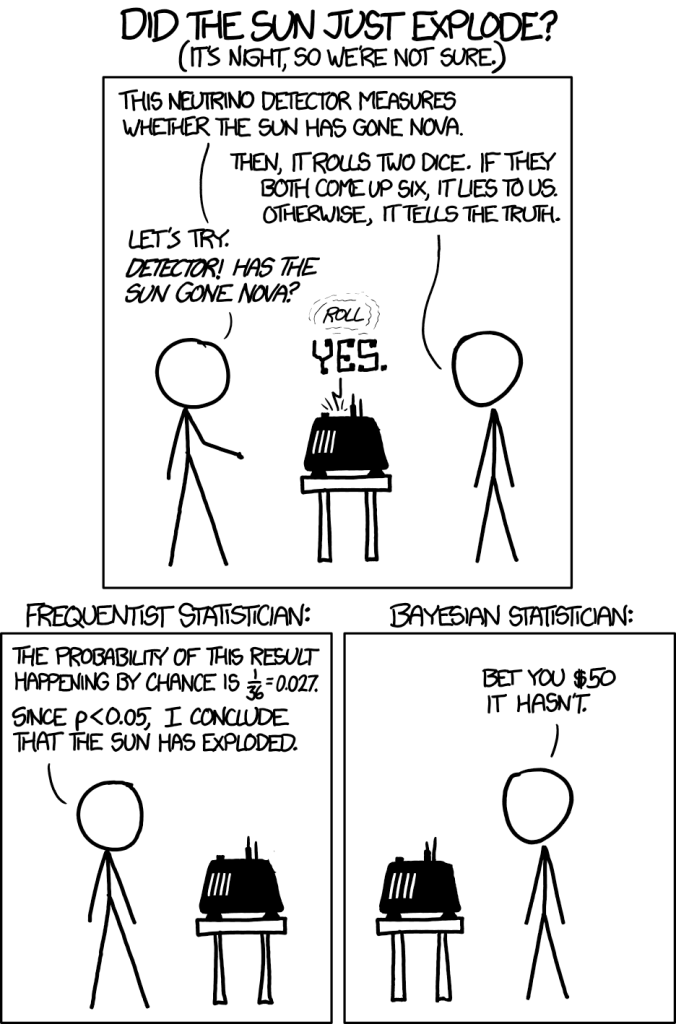
This is a problem in medicine.
Imagine a particular disease, Disease X, has a 1 in 50,000 incidence in the general population, but 1 in every 100 people with MS also have this disease. If you show up to your doctor with symptoms of Disease X, the doctor will often say “Well, there’s only a 1 in 10,000 chance you have that, so it’s probably something else.”
Even when you say you have MS, the doctor will frequently not update his view! The Bayesian response is to change his view dramatically once he has this new information, making it 100x more likely that you have Disease X. But most doctors don’t.
Why not? Well, for one, because they’re doctors, not mathematicians. There are probably lots of other reasons, but that’s the one we’re focusing on here.
The point is this: other information matters whenever you’re looking at the likelihood of an event. The odds of getting hit by lightning are very low, but if you’re standing at the top of a metal tower in a thunderstorm you should really update your prior judgement of your danger level.

