The Real Reason

What’s better: doing good things in the world for ultimately selfish reasons (like donating a huge sum to a children’s hospital solely because you want the hospital named after you) or not doing anything good because you don’t want to be seen as performative?

I think it’s clear that the children in the hospital don’t care if you’re just after social media clout or if you’re truly altruistic; they care that they have somewhere to go when they’re very sick.

Don’t worry about being seen as performative. Heck, don’t worry about being performative! Do good works. Brag about them, if that inspires you to do more. The world needs good deeds, not obsessive humility.

High Q

Do you look up to intelligent people?

I think it’s important to emulate success where you desire it. If you’re trying to build a house, I think it’s a great idea to examine other excellent houses and how they were built. There are eight billion humans experimenting on things every day, and you’d be crazy not to try to gain the benefits of their experience!

But a common pitfall is to defend a bad behavior by finding the smartest or most successful person you can who also engages in that behavior and then say, “See? That person is smarter than me and they do this! So it’s a good idea to do it!”

That’s a heck of a selection bias.

Instead, find the people whose success and even life most closely matches your aspiration, and find out what they do – and don’t do. Emulate those behaviors even – especially! – if they’re different from what you want to do.

If you routinely drink to excess, for example, you can certainly find a smart, successful person who also does that. But if they’re smart and successful, it’s A.) likely that it’s despite that behavior, not because of it, B.) probably true that they could therefore be even more successful if they didn’t, and C.) very possible that they have some other quality that’s actually contributing to their success that you aren’t emulating because you’re focused on justifying the booze.

Emulate the people whose success is virtuous!

Getting a Complex

Don’t get frustrated when you don’t understand a complex system.

Two things are true:

  1. Most complex systems truly have some inefficiencies that can be eliminated, processes that can be improved, etc.
  2. The only way to make those improvements is to be an expert in that system and bring in new ways of thinking, not just one or the other.

You can’t just come into a system you don’t understand as an outsider and magically improve it because you know something they don’t. But it’s also hard to improve something if you’re so mired in it that “the way it is” has become your whole way of thinking.

It takes time. But the results are worth it. Take a deep breath and dive in.

X-Ray Listening

Superman’s best power is x-ray vision. It’s deeply underrated, but knowledge is power. All the strength in the world doesn’t help if you don’t know where to apply it, and being able to perceive the hidden is the key.

It’s as true with words as it is with super-strength, which is why the best skill to cultivate if you want to persuade is listening. Asking questions. Being curious.

No matter what you want to convince, compel, or persuade someone else to do, they will tell you exactly how to do it if you really get curious with them. They’ll give you all the answers, all you have to do is be genuine and patient in your ask.

Self Assessment

A perfectly safe environment is not conducive to self-awareness.

If you really want to know yourself, you need to be challenged. Tested. Otherwise it’s all theory and speculation.

Have you ever heard someone say, “I’d be so great at–” and then name something at which you’re absolutely positive they’d be rubbish? Without more self-awareness, you can’t make accurate predictions like that. And you become more self-aware by testing the theories.

A journey of introspection isn’t a serene stroll. It’s a grueling obstacle course. So if you’re dealing with a lot right now, rejoice! The prize at the end is a more competent, self-aware you.

Rods & Cones

You might know that cats and dogs have a more limited range of colors they can see than humans can. You might have also heard that birds (as an example) can see more colors than humans can; birds literally look at colors you’ve never seen and thus can’t imagine.

Okay, now let’s take a step back and think about “seeing.” What is it? It’s a sensory input – it gives the brain behind the senses information about the world that it uses to further its own survival. You might say that humans do a lot more with sight than just “further our own survival,” but to the extent that’s true it’s clearly because of the brain, not the eyes. If “range of colors you can see” was the scale by which we measured higher existence, then birds would rank above us!

And cats and dogs aren’t suffering because they can’t see as many colors as birds (or as us). They see exactly the range of colors they’ve evolved to see based on the needs of their species. They simply don’t need to see as many colors as we do, and they don’t perceive anything “missing” from their existence. The same is true for any sense. Bats hear much better than humans do, and armadillos are much worse. Dolphins have almost no sense of smell at all, while bears and elephants have very sensitive noses.

The list goes on. This doesn’t even just apply to animals! Every living species has an innate desire to live and takes actions toward that goal (if they didn’t, the species would have died out long ago). And every species can perceive its environment in some ways, using that information to take the best course of action they can to survive. Many of these senses are better or worse than the equivalent sense in humans (and some have entire senses we don’t even have, while others are missing one or more of our “big five”). But each species has the senses it needs, the ones it evolved to have, at the levels that were necessary for its survival. There’s nothing special about any particular sense in itself.

Why am I saying all this?

I’m countering a viewpoint I find particularly silly, which is that it’s okay to eat certain forms of life as long as that form of life doesn’t have a sense of pain that closely mirrors that of humans.

Some people with this viewpoint say things like “you shouldn’t eat cows, but it’s okay to eat bugs or maybe fish because the former feels pain and the others don’t.” What they’re tacitly saying, of course, is that “you shouldn’t eat cows because their sense of pain is close enough to ours that we empathize with it.” But that’s a silly standard!

Pain is just one of many senses that give you information about your environment that’s relevant to your survival. But all senses do that, not just pain! And the level or type of pain (or any sense) that a creature experiences is calibrated to its own needs – it’s absurd to compare it to what a human feels. Humans have used consciousness and culture to ascribe all sorts of negative emotions to pain, but it’s just a sense; it’s not even a whole sense, it’s just the word we use to describe when your sense of physical touch finds something that will hurt you. We have a sense of taste that sometimes tells us something is nutritious or calorie-dense and sometimes tells us something is rotten or potentially poisonous. We don’t usually give the latter its own word, we just call it all “taste.” But that’s all pain is: the “bad taste” of physical touch.

So to attempt to calibrate every species along the spectrum of “okay to eat” based on that one sense is comically absurd. You can’t use it as a proxy for “wants to live,” because every species wants to live. And yes, I’m aware that there are many creatures that individually die willingly in ways that benefit the species as a whole, but even those typically don’t want to die before they do that. Plants want to live just as much as animals do. They’ll grow towards sunlight, because they’re aware of it; their senses might not be as developed as humans’, but they’re the whole of experience to the plant.

Here is my view: it is okay to eat any creature but humans, if you’re a human. There are plenty of reasons why you’d choose not to, from nutrition to cultural norms, but it’s not morally wrong. Every creature exists in a sort of symbiotic competition; none of them want to get eaten, but all of them need to eat. That cycle is life, and it isn’t immoral.

So what would I say are the ways to ethically treat non-human creatures, then? Well for starters, I don’t think you should be cruel. Regardless of the creature’s opinion, cruelty is bad for you; it’s bad for your soul. Don’t harm living things for no reason, but “eating them” is just about the most valid reason there is. Don’t inflict more harm than you have to. And give more back to the cycle – we’re part of that “symbiotic competition” as much as any creature. We can’t turn into parasites that destroy our host. Honestly, my biggest gripe is that we hide our dead. I’m with Walt Whitman; I don’t believe in graves, mausoleums, cremations. I think we should be mulching our dead safely and using them as fertilizer.

All creatures want to live, and all creatures eventually don’t. And for that matter, unless you do what humans do and hermetically seal your remains, all creatures eventually get eaten by something, even if it’s bacteria or worms. We are rightfully part of that cycle in both directions.
Real People

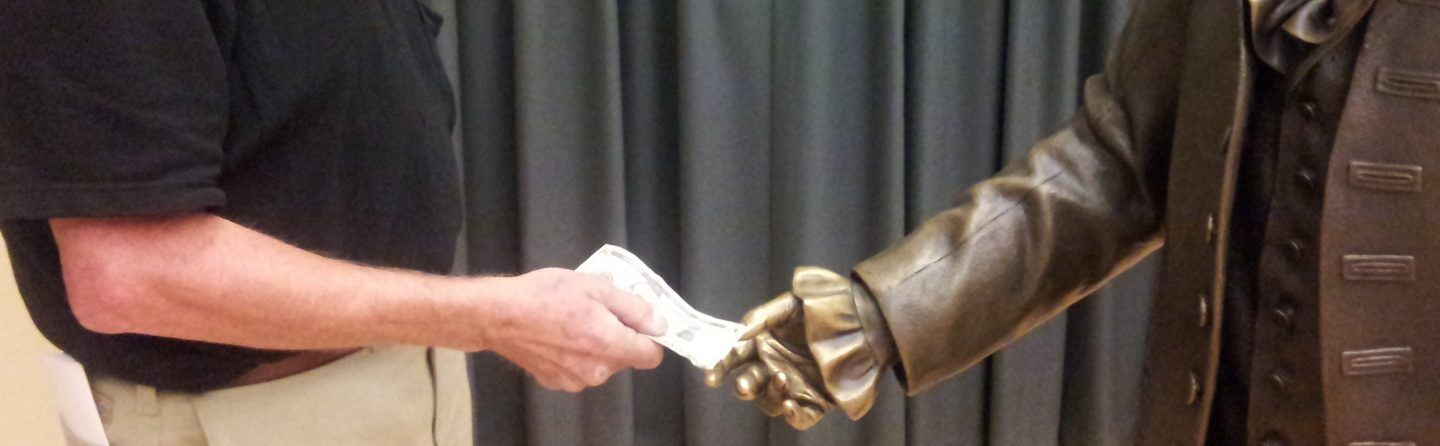
Imagine you met someone for the first time and introduced yourself, maybe asked the other person how their day was going. Without even saying so much as “good, and yours?” they launch into a speech about which type of pie they like best. You ask where they’re from, and they just answer by telling you about 3 different types of pie you should try. No matter what you ask or say, they respond exclusively with information about pie.

Even if they were very nice and even if you liked all the information about pie, you haven’t really gotten to know that person at all. You’ve seen the narrowest single dimension of them; not only a single topic, but only their carefully selected views on that one topic.

Based on just that, it would be very easy to form an extreme opinion about the person. If you like pie, maybe you think they’re amazing. If you hate pie, maybe you think they’re an insufferable bore. But there’s no real room for a middle ground, because you can’t take any kind of average, here.

People in real life are… well, real. People you meet any other way aren’t. Always remember that you don’t know someone at all until you’ve had a few organic conversations with them.

A Consistent Philosophy

I think consistency is an underrated virtue.

Navigating the world and all its complexities in a moral manner requires a solid philosophical foundation. Even when flexibility and exceptions are required, it’s vital to understand why you’re choosing them. To do otherwise is to be ruled by emotion and whim, no matter how much they disguise themselves as reason.

If your “reason” always tells you to do exactly what you impulsively wanted to do anyway, then it’s likely not a consistent moral framework.

One thing I like about having this ongoing record of my thoughts and musings is that it helps to hold me accountable to myself. And knowing that I have to remain accountable in that way tempers my views and opinions. I stay away from extremes and absolutes, knowing that I don’t want to anchor myself to them. I look for solid foundations, and the reality is that I find only a few moral positions worthy of the title. I think that’s for the best.

Niche Risks

If you do something as a profession, you often have to prioritize doing the broadest version of that thing in order to appeal to the largest potential audience or customer base. But the real influence often comes from the specialists, the people who have a very tight niche carved out of the broader field.

In order to become one of those specialists, you often have to take the route of not starting out as a professional!

When you do something for fun or as a hobby, you can take more risks, experiment more, and play more with your time. When you’re doing something as a profession, you have to be more calculating and focus on what makes more immediate money. That means you might never have the juice to explore the more niche aspects that would ultimately make you even more successful.

All this is to say: If you have a hobby that you’re good enough at to “turn pro,” maybe don’t rush into it. Spend a little more time playing around and finding weird specialty corners. In the long run, that might be far more lucrative – and more fun.