A Magical Place

I’m not an expert here, so don’t expect expert advice. This is just me thinking out loud. But I seem to have noticed something over the years about unhappiness.

There are a lot of things that can make people unhappy. Some of those things are temporary external stimuli. Some of those things are internal thought processes. Some of those things are just bad wiring in your head, a bad batch of the chemical soup that your brain floats around in. And sometimes what makes a person unhappy is just that there’s nothing making them happy, and their default state isn’t neutrality.

The thing I’ve noticed is this: when people are chronically unhappy, when people are dealing with whatever mix of those factors exists in their life, it almost always means they are in the wrong life.

Fate dishes you up a lot of defaults. A lot of automatic paths. Some people get lucky in that the path they get dealt by default also happens to be a path that works for them, and they’re mostly happy. Some people get unlucky. Their path, no matter how it looks to other people or “society” or whatever, isn’t the path that makes them happy.

Some “unhappiness remedies” are good and healthy, for what they are. If you have problems in your life, you should fix them. If your brain soup is bad, then pharmacology can help you. Therapy is great. Finding hobbies that spark joy to fill the hours is a wonderful thing. I’m not disparaging any of those, and in fact, I advocate for versions of those in other writings here. But sometimes – and I’m suspecting more often than people realize – all of those things are band-aids that are keeping you in a life that you fundamentally don’t fit in. And they treat the symptoms, but they can never truly cure the underlying cause of your unhappiness, which is that you aren’t supposed to be here.

There are so many possible lives you could be living, it’s incredible. You couldn’t even imagine them all. All the wondrous and diverse ways you could exist! You’re aware of your own path, and the bundle of paths that deviate from yours by maybe 5-10% along any given metric. That’s such a tiny fraction of the ways you could exist! Is it so strange to imagine that maybe, just maybe, you’re unhappy because the fundamental joys of your heart aren’t found in the one tiny corner of existence you defaulted into?

If you’re only a little bit off, maybe a little therapy, a little yoga, and a little Xanax would be great for you. If you’re on the absolute brink of total collapse, maybe you don’t need a vast and arduous ladder built entirely of support programs, forced hobbies, group therapy, and a cocktail of drugs. Maybe you need to join the circus.

I don’t know for sure. But I think that there is a magical place for you, a place where your joy comes more naturally. Maybe you don’t need to force yourself to fit in the place you are.

Ticking Ticking

I’ve been thinking a lot about how we use time lately. Maybe my ever-increasing age has something to do with it, but I keep revisiting thoughts about “time as a resource.” It’s non-renewable. Ultimately finite. Easily wasted. Tremendously valuable. So I think it’s worth thinking about, at least!

And of course, to make it more complicated, you don’t even know how much you have.

Some advice about time seems to be pretty universal, and yet people ignore it all the time. “Spend more time with your family and less time at work” is a truism that everyone has heard and probably few people disagree with, but people keep doing exactly the opposite. To my mind, that means the advice is incomplete. Good advice that you can’t act on isn’t good advice.

The fact is, “productive activity” is what keeps you alive. It’s what pays your bills and gives you a sense of purpose. If I were to spend twenty-four hours a day, seven days a week with my kids, here’s what would happen:

  1. I would absolutely smother my children. They need alone time too, to develop and grow. We need to have a healthy relationship, not constant hovering.
  2. I would obviously not make any money, which would make it really hard to keep a roof over our heads and food in our stomachs.
  3. I would lose a lot of the very experiences that fuel my competency as a parent.

That last one is important. Part of my job as a father is “experience scout” for my kids. I need to live life in order to bring back lessons for my children; if I have a dull life with no experiences then I’m ill-equipped to provide wisdom and insight for my intellectually curious and adventurous brood.

This brings me to another truism about time: “Time you enjoy wasting is not wasted time.” I think that one’s a lot more true but still incomplete. You can enjoy wasting time by shooting heroin into your veins and passing out all day, but that was almost certainly wasted time. Some uses for time truly are bad on almost any measure of “bad.” But it’s a good reminder that when you go, “Ugh, I had a lot to do today but I ended up just goofing off with my family & friends,” you maybe shouldn’t be too upset.

If I can come to something of a more universal rule on time (at least for me), it’s this: “Tempus fugit, so be frugal.” Time flies, so be really discerning about what you spend any time at all on. Go work, be productive. But stay away from the kinds of professions that will demand so much of your time that it isn’t worth it. Have hobbies, but don’t become obsessed. And let yourself be taken often by the kinds of things that you’ll never regret spending time on, like loved ones, your own health, and the like. Good pushes away bad, and leaves no room for time-thieves.

Read, sing, walk, laugh. Work where work is healthy. Sleep more, if you can. Don’t live the kind of life where you need mindless distractions in order to get through the day. This is hard, of course. It’s the key to good living, so of course it’s hard.

But it’s worth spending time on.

Skidding

The telltale signs of rushing – those rapid heartbeats, those frenetic movements of your limbs, the way your eyes will dart from focus point to focus point. You have a lot to do today! You need to hurry!

No, you need to do the exact opposite. Rushing doesn’t get you speed, it gets you mistakes. You can only achieve speed when you have a single task, a central focus. If you’re driving across the country, then an increase from 55 MPH to 65 MPH is a significant saving in your overall journey time. If you’re staying local and visiting 6 different stores for a bunch of errands today, then going from 35 MPH to 45 MPH won’t gain you anything but an increased risk of an accident. You aren’t on any one road long enough for the increase to matter, and any tiny gains you make will be lost at a single red light or long line in a store.

Things take as long as they take, plus any mistakes you make. The trick isn’t to rush; it’s not to skid.

The Twenty-Dollar Jerk

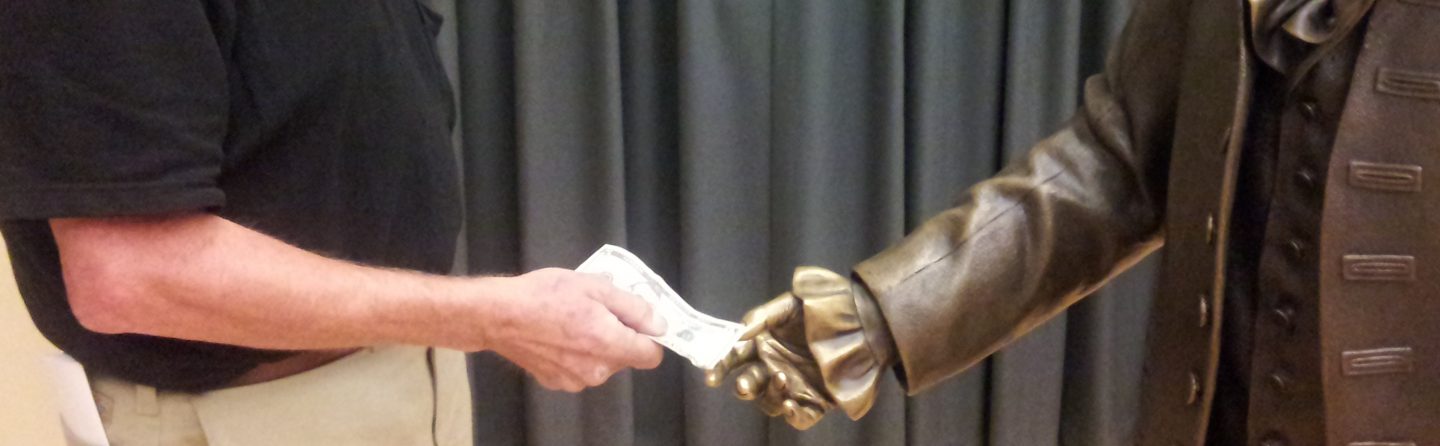
When I was maybe 17 or so, several of my friends and I were working on a project, building something in my backyard. We needed more supplies, so I gave $20 to one of my friends so he could go and buy them. Instead, he absconded with the money, never to return. I don’t know if he did something nefarious with his newfound wealth or if he simply didn’t respect us, but he was gone.

I was pretty steamed about it, and sought my dad out for advice, as I often did. He laughed and said, “Do you know how rich I’d be if I’d gotten rid of every scumbag in my life for only twenty dollars? What a bargain!” His point was this – some people are going to be scoundrels and will try to take advantage of you. Some will even succeed. If you can eliminate such people from your life on the cheap, then that’s a great deal. The alternative is that they stay longer, and either cause you a larger harm later or many smaller harms before they’re seen for what they are.

It’s a great kindness when someone hands you a free pass like that. Don’t get mad about the twenty bucks. Be thrilled that you bought a lot of future happiness at such a low price. If only you could eliminate every jerk from your life for $20 apiece, you’d take that bargain in a heartbeat!

Speak Your Mind

How harmful are the words you say? Are they ever harmful enough that you shouldn’t be allowed to say them? Do you own the consequences of your words, even if the actions belong to another?

If you tell a thirsty person, “drink this” and then point to a glass of acid, how culpable are you for their burns? Maybe you didn’t put the glass there. Did you know it was acid? How can we be sure? Did you claim it wasn’t acid? Did you claim to be handing out water?

Caveat emptor, sure. But do we want to live in a world where we can never trust anything anyone says, simply because there is a complete disconnect between what people say and what we’d hold them responsible for saying?

In case you’ve never heard this, a lot of people will say “you can’t shout ‘fire’ in a public theater!” For one, you almost certainly aren’t using or hearing that phrase used correctly. But even if you’re one of the few who are, that’s a legal question. I’m talking about a philosophical one.

I don’t usually get mad at other people for lying to me or misleading me, even if I fall for it. I consider myself ultimately responsible for all of my own actions. Someone else can tell me to go jump off a bridge, but that doesn’t make me have to listen. Virtually every time in my life that I’ve suffered misfortune because of a lie I believed, it was from a source that, given even an extra moment’s reflection, I should never have trusted. Oh, the sketchy dude in the hoodie behind the gas station lied to you and said that car worked? He’s not ultimately to blame for you being out three grand. You are.

I like to think about it like this – what’s my personal cost if I’m being lied to? If it’s high, then I shouldn’t default to belief.

Coming back around to the harm of your words – I have no desire to harm. I don’t want anyone to jump off a bridge. I don’t even want to say “jump off a bridge” to anyone. But I find it strange that if I did say “jump off a bridge” to someone, and they jumped off a bridge, there’s some reasonable likelihood that I’m culpable for that.

And, to speak my mind, I’m not sure how I feel about it.

Action Alchemy

Most knowledge is useless to most people. Knowledge has no weight, no substance, no effect. Knowing stuff doesn’t change a thing.

That is, until you make it.

Telling someone “Vitamin D makes you healthier” doesn’t make them healthier. In order for that information to have an actual effect, it has to be translated into action. And the reason I say “most knowledge is useless to most people” is most people are terrible at converting knowledge into action.

You can tell people “Vitamin D makes you healthier” until you’re blue in the face, and the majority won’t ever do a thing to get more of it, even if they agree with the knowledge. The extra step of telling people “…so go outside!” is gold.

You don’t need knowledge. You need action. Other people, too. If you really want to help people, you don’t need new information. You just need to help people turn that knowledge into change in their lives. If you do that, you help the world.

Progressively Less Table

There’s a scene that happens in a ton of dramatic shows and movies, and no matter how many iterations of it I see, I always love it. Here’s the scene, which you’ve also seen a hundred times: someone has been injured badly, usually shot, while doing Something They Shouldn’t Be Doing. For that reason, they can’t go to a normal hospital, so they’re being carried to the nearest safe location, which is almost always a filthy home or shop of some sort. The person will die without medical attention, which thus has to be administered in an amateur way in said filthy hovel.

Just as the chaotic entourage is bursting in, shouting incoherent orders, someone will invariably sweep clean the nearest large flat table so they can lay this person down. And this is my favorite part – because in these scenes, that table is always covered in junk. Like, an absolutely ridiculous assortment of bottles, electronics, trash, ammunition, motorcycle parts, and animals will just get shoved unceremoniously onto the floor so they can use that table for the very important work of saving someone’s life from a deadly injury.

Yeah, you’ve seen that scene a thousand times, haven’t you? It’s a classic for a reason.

Anyway, here’s the relevance. Today’s analogy. The table is our normal, day-to-day life. It accumulates stuff we have to do – tasks and jobs and activities and responsibilities. They accumulate little by little, because we can always find a little corner or unused space to put it in. We can always stack a new object on an old one or shove a few things around. Sure, with each new object, the table becomes less and less usable. The objects become harder to find, the table groans under the weight. Some stuff rolls onto the floor and we can’t find it. Some stuff gets messy. But we like the stuff individually, so we always pile on a little more.

But when a man has been shot, you don’t spend time dithering about where you’re going to fit him! You don’t waste time trying to do more and more with progressively less table, you push that shit onto the floor! In an emergency, the thing to sacrifice isn’t ourselves. It’s everything else. You need to be operating at peak efficiency! When you’re in dire straights, don’t try to figure out how you can resolve the emergency and maintain everything else, killing yourself in the process. Throw it all on the floor, solve the emergency, and then pick it back up. You probably won’t even want to pick up 80% of it.

You’ll save a life and clean a table. Sometimes that’s a big win. Almost worth getting shot.

Grand Gestures

I’ve always been a sucker for a grand gesture. Playing it safe has its place, but the more important something is to you, the less safe you should play it.

I think bold moves work for a lot of reasons. For one, they have a “burn the boats” quality: you’re committing to something in a way that leaves you fewer options to back out. And that’s another reason they work, because that commitment tends to be public. As long as you don’t cry wolf very often, people can see that your move is above and beyond what you normally do, and thus you effectively transmit your seriousness about what you’re trying to do. Talk is cheap, but actions speak volumes.

And maybe that’s another reason I love them. Talk is cheap, which means even when it works, it isn’t a terribly good story later. So much of what we leave behind is just the stories, so you might as well aim for at least a few great ones. Even if your bold move doesn’t work, the story of trying and failing is better than the story of how you played it safe.

Screw your courage to the sticking place, my friends.

Chapter You

When you’re reading someone else’s story, they organize it for you. The chapters end when they end, and the story concludes when it feels right to the author.

When it’s your story, the words and pages just go until they don’t. No one can organize it but you. So if the story you’re in feels a little disorganized right now, don’t worry. That just means it’s yours.

Opti-Modeling

There are lots of things you understand. If you can model something you don’t as something you do, you can transfer that understanding. So a really useful “meta” skill is just being able to cross-model things.

Here’s an example. Many of my clients have inadvertently adopted the model that “more stress” equals “more productivity” in a linear fashion. They feel stressed so they’re unproductive, but they’re unproductive so they’re stressed, so they add more stress by trying to do more in order to be more productive, and ka-boom.

Here’s a model a lot of people understand, though. Imagine you’re flying a fighter jet. You push the engine really hard, and the whole thing starts to shake and rattle. It starts to wobble and the instruments start to go red. You’re not flying very efficiently. Is your response, your solution, to give her more gas?!

No! You ease up. You quickly recognize that there’s an optimal flight speed, and it isn’t necessarily max power. You understand this even if you’ve never flown a fighter jet in your life.

This is why it’s awesome to just open up and let yourself learn weird things that aren’t directly relevant to your primary goals. Go watch that video about African snail mating habits! Who knows, maybe it’ll contain a model that helps you figure out a tricky client retention problem you’ve been having.

There are plenty of benefits to being a model learner.