Blog

Reasons To Argue

People are far, far too quick to pull the trigger on an argument.

There are some very decent reasons to debate, mind you. But I’m going to give you a secret that can change your life for the better: Disagreeing with someone is not a good reason to argue. Not by itself, anyway.

You’d probably never know it from talking to me, but I have some pretty deep, strongly-held political positions. Things I’m passionate about. I almost never discuss them. Why? Because the cost is so high, and the payoff is so low.

A regular argument takes lots of mental energy and is unpleasant and taxing. That’s a high cost in time and stress, and generally I only do things that cost that much to me if they’re going to be extremely beneficial for me. Arguments don’t meet that criteria – not even close.

Consider: First, you have no guarantee that the person you’re debating with is even playing the same game as you. Are they trolling? Arguing in bad faith? Just looking to signal to their peers? Chances are good they’re not coming to the table with the pure intentions of learning and exchanging information. And you know that, somewhere in your mind, but the lure is strong.

Second, even the best case scenario is that there’s only the tiniest, almost infinitesimal chance that you change anyone’s mind or influence anyone in that format. Persuasion is a powerful force, but individual arguments are the completely wrong forum to apply it in. A stage debate where you have an audience – that’s a little better, because the point isn’t to change the view of your opponent, it’s to change the view of the audience. But even that is subject to many other factors.

Third, and this is the biggest component: So what if you do change their minds? Are they in any position to alter the world with their new worldview? Or did you do all that convincing just for someone to go “Huh, I guess you’re right,” and then change nothing at all about their lives, let alone the lives of others? If I convince Bill Gates that there’s a charity that will do better things with his money than what he’s doing with his foundation now, I have the possibility of making a huge impact. But if I have that same argument with Bill from Accounting who doesn’t even donate to charity, I’ve wasted a lot of breath.

So when SHOULD you argue? When you know the other person is arguing in good faith, you won’t damage treasured relationships, and you have a decent chance of influencing one or more people who will actually have a tangible impact on the world if they move closer to your position. It also helps if you know you’re right, but nobody’s perfect. That criteria sure narrows down the opportunities to debate, doesn’t it? Following those rules, you’d never have arguments at Thanksgiving dinner or with the person in line in front of you at Starbucks or with strangers on Twitter, would you?

This is a long way of saying “Pick Your Battles.” Don’t make sacrifices without cause. Don’t fight with loved ones, because they matter; and don’t fight with strangers, because they don’t. Take your deeply held values and act on them – make the world a better place. Build the world you want to see. You get there by acting, not by arguing.

Hard Work vs. Hustle

All hustle is hard work, but not all hard work is hustle.

“Hustle” is increasingly seen as not only an act, a thing you do – but as a quality. “That kid has hustle,” we’d say, and nod approvingly. At least, I would. It’s a tremendous quality, one we should all endeavor to cultivate in ourselves.

I’m sorry to say I learned to hustle much later in life than I should have. I’ve been thinking a lot about it lately, and working on a more precise and accurate definition.

A young person works for a landscaping company, for example. They’re the first one on the job every morning. They work harder than everyone else, and they’re the last one to go home. The work up a sweat every day and they never complain – they always have a smile on their face. This person is a hard worker, but I wouldn’t call them a hustler.

So what is “Hustle?”

Here are my 5 definitions of Hustle (as opposed to just hard work):

  1. Hustle cares about results, and is willing to change methods. Hard workers work harder when they’re not succeeding, but hustlers actually change their methods.
  2. Hard Work is something to get done; Hustle is a lifestyle. Hard Work might work overtime, but Hustle never sleeps.
  3. Hustle doesn’t care about what others think of how they get there. Hustle would rather be a financially secure janitor with a side-gig selling refurbished couches than a broke, indebted corporate lawyer.
  4. Hard Work wants others to recognize and reward them for their efforts; Hustle doesn’t want any other hands in their pie.
  5. Hard Work doesn’t especially like change. They like to get good at something and then have that thing remain relevant. Hustle recognizes that everything is temporary and is always looking for the next thing.

Hard work is an essential component of success, and you’ll never avoid it. It’s necessary, but not sufficient. If your goal in life is just to make it to the end, hard work (plus a little luck) might get you there. But real success takes Hustle. Hustle is an external vision; it’s caring about the world around you and how it moves, and figuring out how you can help it move a little smoother. Hard Work can fell a hundred trees with an axe, but Hustle invents the chainsaw. Hustle isn’t “work smarter, not harder” – it’s “work harder AND smarter.”

Hard Work can sometimes have the negative side effect of building up a sense of entitlement. “I worked hard, so I deserve this.” Or, “I worked hard, so the world owes me this.” It can create the mentality that the only requirements for success are (or should be) not doing anything wrong, “keeping your nose clean” and “paying your dues.” Grind away for forty years and you get the gold watch.

Hustle knows if you want that watch, you have to buy it.

Case of the Mondays

It’s so rare for me to notice what day of the week it is.

It’s been a long time since I abandoned the pretense that there was anything different about two days of the week as opposed to the other five. The reality is that 24/7/365 you have things that need to be done and goals to accomplish. You can compartmentalize those goals, but I think it’s a mistake to do so too heavily.

We strive for things like “work/life balance” but work isn’t a separate thing from your life. You don’t hear the phrase “family/life balance” or “hobby/life balance” thrown around.

Now, don’t misunderstand me. I don’t believe that you have to absolutely, 100% love and feel passionate about your work in order to find meaning in it. But I also don’t think you have to absolutely, 100% love anything in your life. You’re allowed to think your kid is being a brat today. You’re allowed to ditch that boat engine you’ve been trying to salvage. You’re allowed to hate the paint color in your bedroom.

In other words, work is part of your whole life, not a thing you do just so you can get back to your life. You don’t have to love any part of your life all the time, so you don’t have to live and breathe your job in particular, but you should absolutely love the concept of working towards your goals enough that you aren’t excited about stopping at 40 hours, or on specific days.

If your chosen vocation is doing such a poor job of motivating you that you dread Mondays, then either you’re in the wrong vocation or you need to take a hard look at your own values. Maybe both.

Because whether you’re working or working out, spending time with your family and friends or time on that book, everything you do should be taking you closer to your next goal, your next happy moment, your next accomplishment. Why else are you alive?

No man, no.

“You ain’t tapped out yet, boy.”

Some of the best advice my father ever gave me.

Years ago, he and I were sitting and talking. I was stressed, as probably many 20-somethings are, about a number of things. In that particular conversation, I was stressed about money and the cost of supporting a family. My full-time job was okay but not amazing. And I was doing a sort of woe-is-me complaining session about how despite my full-time work, I wasn’t hitting my financial goals.

And that’s what he said to me. “You ain’t tapped out yet, boy.”

I had gotten it in my head that working 40 hours a week at a job somehow meant that I “deserved” to be meeting my financial goals, and that an unfairness had been visited upon me because that wasn’t happening.

This is one of the biggest traps in modern America. “Doing what you’re supposed to,” and then hitting a petulant, indignant wall where you refuse to acknowledge that maybe that isn’t enough. You’re given this specific set of hoops to jump through – get good grades in high school, go to college, get a 40-hour-a-week job – and told that if you do them, everything will work out. And if it doesn’t, you get upset.

My grandfather supported his five kids and stay-at-home wife in a beautiful home in the suburbs by captaining a ferry. That’s awesome, but (pardon the pun) that ship has sailed. That same wife, my grandmother, watched me during the day so my mom could work 70-80 hour weeks at her corporate job and my father could drive a truck over the road, then my exhausted mom would take care of me (and later, my sister) on the weekends while my father worked his second job, a videography business that he ran.

And I was complaining that my 40-hour-a-week gig wasn’t, alone, making me as successful as I wanted to be.

“You ain’t tapped out yet, boy.” There were hours in the week unused. I got a second job immediately, working nights and weekends. I eventually even picked up a third sales gig, and that one proved lucrative enough that I was able to drop the first. Ever since that day I’ve never had fewer than two sources of income at one time. It’s much harder than just clocking in and out at a single 40-hour gig, but it’s also more secure, more lucrative, and more rewarding.

This is tough love at its finest. The world doesn’t exist for just forty hours a week – it’s there all 168. You have to sleep, you have to eat, you have to spend time with your loved ones and you have to pursue what makes you happy, but that doesn’t mean you’re entitled to those things. You are entitled to life, you are entitled to liberty. But you’re only entitled to the pursuit of happiness, not happiness itself. If you’re not happy yet, work harder.

You ain’t tapped out yet.

Music, Old and New

Here are three new (to me) albums I’ve liked recently. They aren’t the “three best albums of the past however many years” or anything like that. Just three albums I liked.

  1. Turkey Dinner by Pinky Pinky
  2. Elizabeth Moen (self-titled)
  3. In League With Dragons by The Mountain Goats

Here are my five favorite albums of all time (not necessarily in order):

  1. The Wall, by Pink Floyd
  2. Horrorscope, by Eve 6
  3. Flood, by They Might Be Giants
  4. Abbey Road, by The Beatles
  5. American Idiot, by Green Day

What are yours?

Time To Go

If at first you don’t succeed, try try again. If at seventeenth you don’t succeed, quit being so stubborn.

There comes a point in every endeavor when it’s time to throw in the towel. I know that doesn’t sound very motivating, but it’s true. And trust me, it’ll get really motivating when you’ve thought about it.

Every activity you could engage in falls in one or more of the following categories:

  1. Things you’re good at.
  2. Thing you love doing.
  3. Things people will pay you for.

There are things I love doing that I suck at. I’m a terrible singer, but when no one is listening I actually really enjoy it. There are things I’m good AND that I love but that don’t have much value to society at large. I’m great at playing with my kids and I love doing it, but people aren’t beating a path to my door to hand me money for it. There are things people will pay me money for, but that I don’t love and I’m not good at. In theory people will pay me to perform heart surgery, but I’m not any good at that and I certainly don’t love it so it’s probably not a good idea. Even things I’m good at and people will pay me money for, I don’t always love. I wouldn’t say I loved construction sales, but I was good at it and it made me money.

You don’t always get to do things that fall into all three categories. If you do, it’s really awesome. But even if you don’t, that’s okay sometimes. Sometimes I do things I’m good at and people will pay me for, in order to have money to do things I love. That’s a perfectly acceptable trade-off.

Sometimes, however, you find something that doesn’t fit into ANY of those categories. You’re doing something you’re lousy at, doesn’t make you any money, and you don’t love. Maybe you’re trying to get better because you think the activity’s ranking in one or more of those categories will improve. And maybe it’s worth a second or third try to find out. But it’s probably not worth a tenth.

This isn’t me telling you to give up on your dreams. If it were your dream to do X, then X would at least have a high ranking in the category of “things you love.” I’m telling you to give up on things you hate, aren’t good at, and don’t make money.

This is surprising advice to many people. You probably have at least one thing you’re doing that meets that description.

You know what I hate doing? Yard work. I’m terrible at it; my gardens never grow, my grass is always yellow, etc. I get no enjoyment out of it. And it doesn’t make me any money – quite the opposite. It usually costs me money because I take so much time to do even simple landscaping tasks.

So I hire someone else to do it. I save money because I can work during those same hours and make more than I pay (yay division of labor!). Instead of “keeping at it” until I was good or until I loved it or until it made me money, I quit.

My life is better for it. It could be something as simple as yard work or as big as your current job. But there’s something in your life you should quit right now. Free up your life to pursue something that fits better into one of the three categories.

Maybe all three!

Flood

It’s not just the amazing 1990 album by They Might Be Giants – it’s also the current condition of my basement!

We’re getting some pretty crazy storms out here in the Mid-Atlantic region. Today while I was driving, I had to take a detour to avoid a major highway shutdown, and when I passed the highway in question, I saw an emergency rescue vehicle on the road.

It was a boat.

No kidding – the local fire team had an emergency raft and had deployed it to rescue people stuck in the flooded streets.

The weather out here is crazy. This morning I was building and flying a kite. Then they have to deploy street-boats and my basement floods. New Jersey is weird; it’s the only place I’ve ever lived where it can be below freezing and still rain. In the winter Jersey gets this sort of sludge made of water, ocean salt and industrial goo that just stands like jell-o, three inches thick but still completely liquid. And our summer storms are insane. Imagine the difference between taking a shower and just having an entire bathtub full of water dumped on you at once. That’s the difference between normal rain and what we get. It’ll only last five minutes but drop twenty inches of water on us.

I really like to do this sort of Doogie Howser thing where I find the episode-summarizing lesson in everything that happens to me. But the lesson here is probably just that sometimes stuff happens. You’re not being punished and your life isn’t worse than anyone else’s just because of a bad event. You have to roll with it sometimes. Break out the mop and bucket and get to work. It’s good for you to get humbled by nature now and then, just to remind you how good you really have it.

Go Fly A Kite

This morning I made a kite with my oldest kid.

She was in charge of decoration; I was in charge of construction. I can tell you that the kite was very well decorated.

I didn’t get up this morning with a plan to build a kite. In fact, I had a lot of other things I needed to do; it’s a busy day. I had a plan all laid out for what I wanted to accomplish today. My plans are often quite resilient, but there’s no such thing as a plan that never changes. What happens when you have to change and adapt?

That’s why principles are greater than plans.

A firm set of values that guides your decision-making is better than a concrete plan. Principles allow you to adapt without confusion. They let you restructure a plan without losing sight of what’s important. Sometimes they even give you the mental tools you need to change or abandon a goal that no longer fits with your life.

And sometimes they tell you that all the important things you had to do this morning aren’t as important as making a beautiful, poorly-constructed kite and then running around the yard like maniacs, laughing hysterically while trying to fly it.

Minimum function, maximum style.

The “I” in Team

There are many versions of you.

I might be two dozen people in a given week. Though they share many traits, they’re distinct. Unfairly, many of them reap the benefits of the hard work of others, and some are punished for things others did.

For instance, many times a week there is an Industrious Johnny, who works very hard to make money. That version of me rarely, if ever, sees the reward of that labor. Instead, Dad Johnny who relaxes on Sundays and plays with his kids gets that benefit. And Sunday night, after the kids are in bed, Movie Buff Johnny swore he’d get a head start on Monday’s work so that Industrious Johnny could get a little break, but (unsurprisingly) that jerk just watched a movie instead. But does Movie Buff Johnny pay the price for his sloth? Ha, no way! He enjoyed watching The Truman Show for the eighty-seventh time (seriously, he loves that movie) and hadn’t a care in the world.

Sometimes Hungry Johnny has to eat, but it’s Working Johnny that picks up his tab. Happy-With-Himself-In-The-Mirror Johnny reaps all the rewards from Workout Johnny’s efforts, and Workout Johnny has to work extra hard when Weakness-For-Twix-Bars Johnny indulges.

Now, Movie Buff Johnny and Weakness-For-Twix-Bars Johnny aren’t bad guys. They’re crucial for the morale of the team. You just can’t put them in charge.

Fortunately, there’s a Principled Life Plan Johnny. He’s far from perfect, but he’s doing a pretty good job with this ragtag group of misfits. And that’s what it’s all about – managing the team. Because almost all versions of Johnny don’t actually get what they deserve; they all usually work hard and get no benefits, or get benefits but don’t work hard, or make mistakes others pay for, and so on. If there wasn’t a good manager at the helm, they’d riot.

When you see people who lack discipline in their lives, maybe it’s just a failure of leadership. Their Workout Steve or whoever got tired of busting his hump just for Six Pack Steve to constantly ruin it, because there was no Principled Life Plan Steve to tell Six Pack Steve to take it easy. And Six Pack Steve hasn’t even met Dies-Early-From-Liver-Failure Steve yet, so he doesn’t really care about that guy.

Your mission, as Principled Life Plan You, is to manage this team the way any good team leader would. You mentor the good team members and help them grow, giving them the tools to succeed and promoting them to positions of greater authority and influence. You help put other people in the roles where they perform the best and make the best contributions to the team: Movie Buff Johnny is great for team morale in small doses, but I have to be careful not to let him take over when it’s supposed to be Workout Johnny’s shift. Sometimes you have to make hard calls and fire people, even if you like them, because it’s what’s best for the team. Liquor Johnny used to be a really fun guy, but he just wasn’t a team player.

When the team is managed well, their needs and abilities considered and the overall health of the team made a priority, everybody wins.

This has been Blogging Johnny, signing off. See you tomorrow.

The Everything Jar

I have some advice for you today: Only do things that you would pay to do.

That’s a more easily-graspable way of saying “only do things that have value from your perspective.” I love movies; I’m a huge movie buff. I don’t actually go to the movies that often; instead I watch many movies on my home theater setup. Why? Because going to the movies is expensive, and watching them at home isn’t.

“Inexpensive” doesn’t mean “free,” though. Even ignoring all the initial costs to set up my home theater, and ignoring minor unit costs like the electricity to run it and so on, it’s expensive in time. I watch movies because I enjoy them, and there’s value in that. But from a strictly revenue-generating standpoint, I could certainly be doing something more effective with my time.

Obviously some relaxation and entertainment has value – it might even be essential. But we overindulge easily; especially when the costs are more hidden. I don’t go to the movies often because the costs are very obvious; I have to pull out my wallet. The costs in idle time are more subtle.

If watching a movie at home cost me a dollar – a real, immediate dollar I had to pay – I would still watch movies. I might not watch as many, but I’d do it.

But what if I had to pay a dollar every time I argued with someone on Twitter or Reddit? Would I still do that? Heck no. (Note: That’s just an illustrative example; in reality I find that so unpleasant that I rarely if ever actually do it. But I know it’s an irresistible temptation for many!) So that’s a good benchmark – think of every decision in your life as costing a dollar, and see which ones you’d still do.

Would you pay a dollar to spend time with your children? I hope! Would you pay a dollar to honk your horn at that jerk that cut you off? Maybe not – or at least you’d be aware of how often you did it, and maybe do it less.

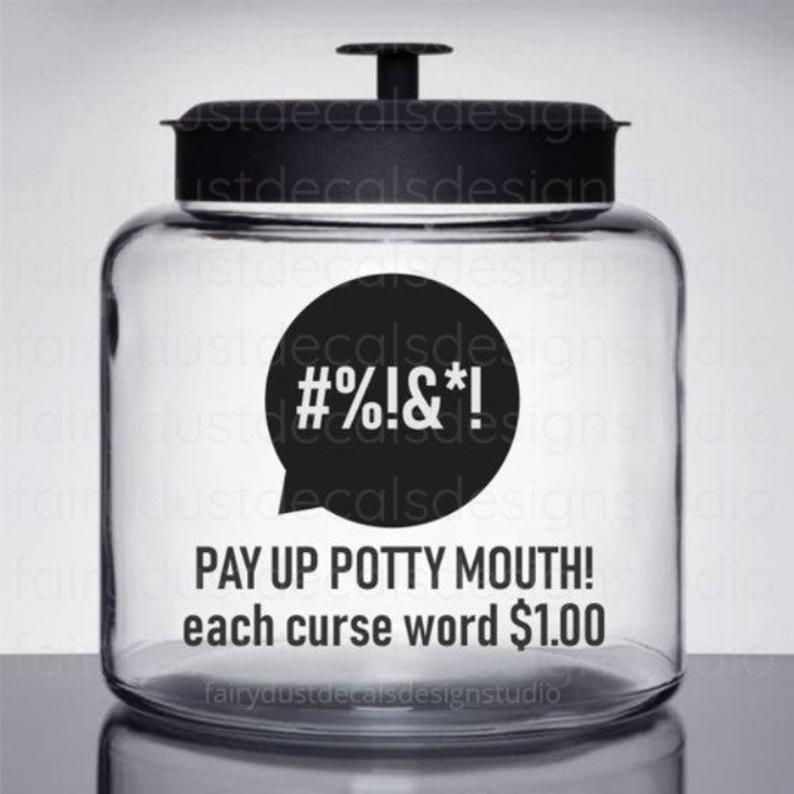
This is the Swear Jar, but for every decision you make.

Once I started thinking about this, so many things immediately fell into the system for me. Would I pay a dollar to read a blog I found interesting? Almost certainly. Would I pay another dollar to read the comments? Heck no.

I think most people’s lives would get measurably better if they imposed a cost of a dollar on every action they took, even if only in the mind. It’s an easier way to discipline yourself into only doing things with real value to you, instead of the idle time sinks and negative responses we’re all so prone to as humans.

Hopefully the value of this blog was at least one hundred and one cents to you!